

Fancy coffee is specialty coffee crafted from distinct, carefully sourced beans and prepared using artisanal methods to deliver an elevated sensory experience. The industry term is specialty coffee, defined by the Specialty Coffee Association as coffee scoring 80 or above on a 100-point scale. What most people call “fancy” sits at the intersection of rare bean varietals, precise processing, and skilled brewing. Whether you are pulling a ristretto shot over ube coconut milk or dialing in a Gesha pour-over at dawn, the difference between ordinary and extraordinary coffee comes down to decisions made long before the cup reaches your hands.
What makes fancy coffee different: beans, processing, and flavor
The foundation of any gourmet coffee experience is the bean itself. Colombian Gesha and Pacamara varieties are prized for unique flavor profiles and rarity, making them the backbone of luxury coffee brands and high-end café menus worldwide. These are not commodity beans. They are grown at specific elevations, harvested by hand, and processed with a level of care that directly shapes what ends up in your cup.
Processing is where specialty coffee gets genuinely interesting. Methods like anaerobic fermentation and hop infusion do not just preserve the bean’s natural character. They amplify it. Experimental processing enhances flavor distinctiveness in ways that origin or roast level alone cannot achieve. Royal Coffee’s Crown Jewel Colombia Circasia Edwin Noreña Carbonic Galaxy Hops Co-fermented Gesha is a textbook example: a single-origin bean processed with Galaxy hops to produce tropical and resinous notes that read more like a craft beer than a traditional coffee.
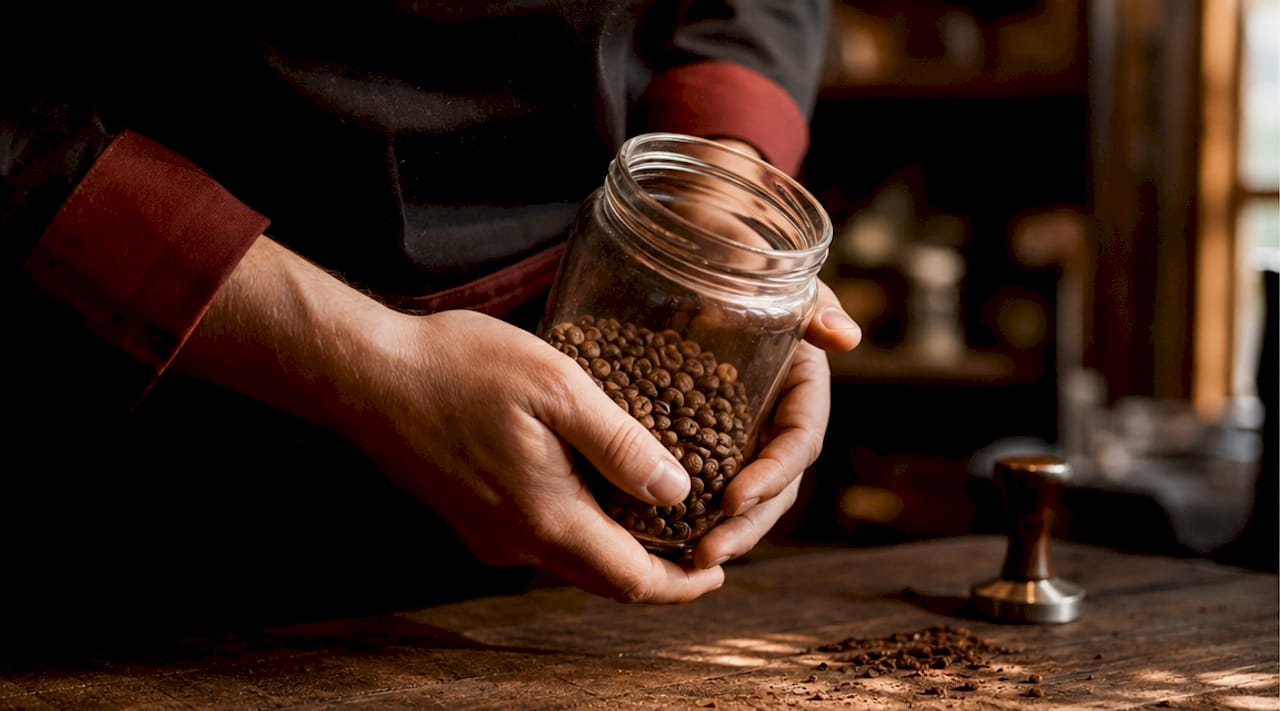
Brewing variables matter just as much as the bean. Delicate coffees like Gesha require lower total dissolved solids to perform at their best. A TDS range of 1.12 to 1.26 is recommended for co-fermented and floral varieties, preserving brightness and botanical complexity without tipping into bitterness. Understanding this number separates a home brewer who gets lucky from one who gets it right every time.
Pro Tip: Buy whole beans and grind immediately before brewing. Pre-ground coffee loses volatile aromatic compounds within 15 minutes of grinding, which is the exact window where floral and fruity notes in specialty beans are most vivid.
Here is what separates premium coffee types from the rest:
- Bean varietal: Gesha, Pacamara, and Bourbon command attention for their genetic complexity and flavor range
- Processing method: Anaerobic fermentation, carbonic maceration, and co-fermentation with botanicals create profiles unavailable through conventional washed or natural processing
- Roast precision: Light to medium roasts preserve origin character; dark roasts favor body and reduce acidity
- TDS calibration: Dialing in extraction strength to the bean’s specific profile prevents over-extraction and bitterness
How do brewing methods shape the specialty coffee experience?
The brewing method is not just a delivery mechanism. It is an active participant in flavor development. Each method extracts different compounds at different rates, which means the same bean can taste entirely different depending on how you brew it.
| Method | Flavor Profile | Best For | Key Variable |
|---|---|---|---|
| Pour-over (Kalita Wave) | Bright, floral, clean | Delicate Gesha or light roasts | Brew ratio 1:17.65 |
| Cold brew | Smooth, low-acid, chocolatey | Medium to dark roasts | 12 to 24-hour steep |
| Espresso | Concentrated, bold, syrupy | Balanced blends and milk drinks | 25 to 30-second extraction |
| Ristretto | Intense, sweet, no bitterness | Delicate milk-based drinks | 1.0 to 1.5 oz extraction |
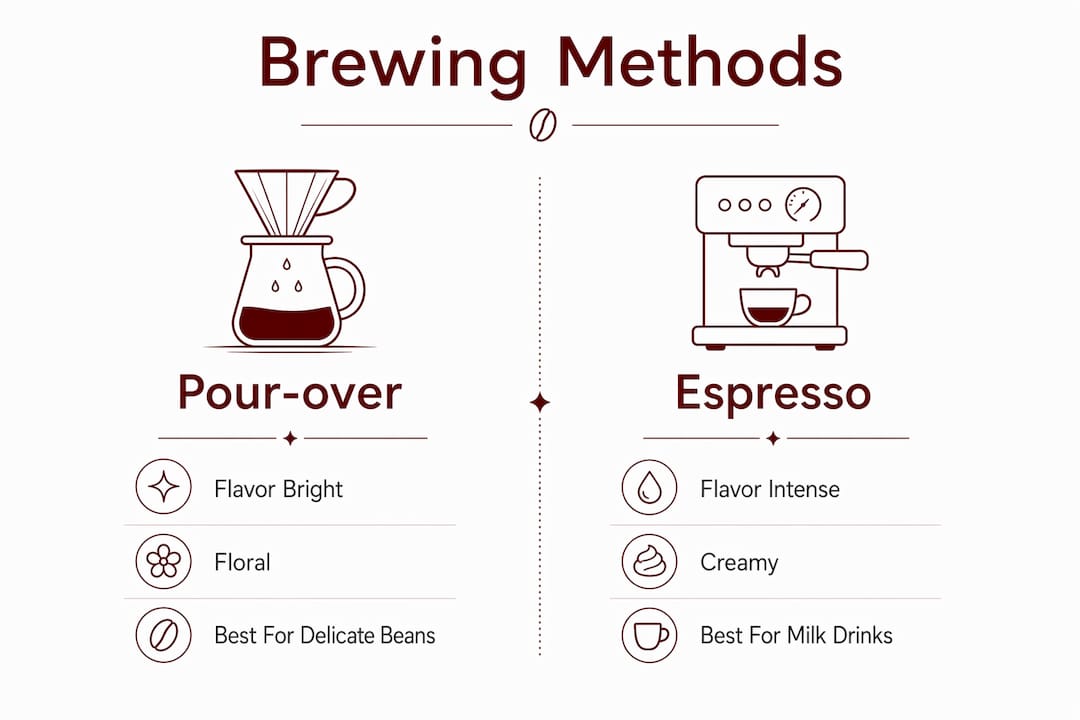
The Kalita Wave dripper is a favorite among specialty coffee professionals because its flat-bottom design and three-hole drainage slow the flow rate evenly, producing a cleaner and more balanced cup than a V60 at comparable ratios. Using a brew ratio of 1:17.65 with the Kalita Wave highlights delicate floral and fruity notes in high-end beans without over-diluting the cup.
Ristretto shots deserve special attention for anyone building milk-based artisan coffee blends. Pulling 1.0 to 1.5 ounces instead of the standard 2-ounce espresso shot produces a more concentrated and balanced flavor. The shorter extraction time pulls sweetness and body while leaving behind the harsher, more astringent compounds that emerge late in the pull. For drinks like an iced ube coconut macchiato, this matters enormously because the espresso must hold its own against rich, flavored milks.
Visual presentation is the third dimension of the specialty coffee drink experience, and it is entirely technique-driven. Slow pouring over a bar spoon allows syrup or milk to float atop coffee by manipulating density and flow rate. The result is the distinct layering you see in café photos, and it requires patience and practice rather than any special equipment.
Pro Tip: Chill your glass before building a layered iced drink. A cold surface slows the temperature exchange between layers, giving you more time to pour slowly and maintain clean visual separation.
Popular fancy coffee drinks and how to make them at home
The most compelling argument for mastering artisan coffee blends at home is the cost. Making an iced brown sugar oat milk shaken espresso at home costs roughly $0.90 per serving compared to $7.45 at a café. That is not a rounding error. Over a month of daily drinks, home preparation saves more than $195. The technique is accessible, and the results are genuinely café-quality when you follow the right steps.
Iced brown sugar oat milk shaken espresso
- Brew two ristretto shots (1.0 to 1.5 oz each) directly over ice in a cocktail shaker
- Add 1.5 tablespoons of homemade brown sugar cinnamon syrup
- Shake vigorously for 15 seconds until foam forms on the surface
- Pour over fresh ice in a tall glass
- Top slowly with oat milk, pouring over the back of a spoon to preserve layering
The shaking step is not optional. Precise ratios and the shaking technique create foam stability that prevents separation and gives the drink its signature frothy texture. Skipping it produces a flat, visually unimpressive result that tastes fine but misses the point.
Iced ube coconut macchiato
- Pull one ristretto shot and let it cool for two minutes
- Mix 2 oz of ube syrup with 4 oz of coconut milk in a separate glass over ice
- Pour the ristretto slowly over the back of a spoon onto the coconut ube base
- Garnish with a light dusting of toasted coconut
The ube layer sits at the bottom because its syrup density is higher than the coconut milk. The espresso floats on top because it is less dense than the coconut mixture. Understanding density is what separates a drink that looks like a café creation from one that looks like a muddy experiment.
Homemade syrups create richer flavor than store-bought alternatives because you control the sugar concentration, spice ratios, and freshness. A basic brown sugar cinnamon syrup requires equal parts brown sugar and water simmered with two cinnamon sticks for ten minutes. Bottle it, refrigerate it, and it lasts two weeks. For unique coffee recipes at home, this single skill unlocks dozens of café-quality drinks.
You can also explore caramel coffee pairings to add another dimension of flavor depth to your home repertoire.
Where to source quality beans and brewing equipment
The best coffee tasting experiences start with sourcing. Specialty roasters like Royal Coffee, Onyx Coffee Lab, and Intelligentsia publish detailed processing notes and flavor descriptors for every lot they sell. This transparency is the mark of a serious roaster. If a bag does not tell you the farm, the processing method, and the harvest year, it is not specialty coffee regardless of the price.
For home brewing equipment, prioritize these tools:
- Grinder: A burr grinder from Baratza or Fellow Ode produces consistent particle size, which is the single biggest variable in extraction quality
- Brewer: The Kalita Wave 185 or Hario V60 for pour-over; a Breville Barista Express or De’Longhi Dedica for espresso
- Scale: A Acaia Pearl or Timemore Black Mirror for measuring brew ratios to the gram
- Storage: Airscape or Fellow Atmos canisters to limit oxygen exposure and preserve freshness
Fresh grinding matters more than any other single variable in home brewing. Pre-ground coffee is a compromise that no amount of technique can fully compensate for. Buy whole beans, grind on demand, and store in an airtight container away from light and heat.
If you want to understand how origin shapes flavor before committing to expensive single-origin lots, exploring assorted specialty packs is the most efficient way to map your preferences across regions and processing styles. It is the coffee equivalent of a tasting flight.
For a deeper understanding of how processing and terroir interact, the Obsidian coffee flavor guide from Espritkaffe breaks down how roast profiles and origins combine to produce distinct sensory outcomes.
Key takeaways
Fancy coffee is specialty coffee defined by rare bean varietals, precision processing, and skilled brewing techniques that together produce flavor complexity unavailable in commodity coffee.
| Point | Details |
|---|---|
| Bean varietal drives flavor | Gesha and Pacamara offer complexity that standard Arabica cannot replicate. |
| Processing amplifies character | Anaerobic fermentation and hop infusion create profiles beyond what origin alone delivers. |
| Brewing method is not neutral | Ristretto shots and Kalita Wave ratios extract different compounds and change the final cup entirely. |
| Home brewing is cost-effective | Replicating café drinks at home cuts cost from $7.45 to $0.90 per serving. |
| Technique determines presentation | Layering, shaking, and slow pouring are learnable skills that produce professional visual results. |
The part most coffee guides skip entirely
I have spent years tasting through specialty lots, and the single most underrated shift in the coffee world right now is not a new bean or a new roaster. It is the consumer’s growing willingness to care about processing variables. Five years ago, telling someone their coffee was co-fermented with Galaxy hops would have produced a blank stare. Today, that same detail drives purchase decisions.
What this means practically is that the ceiling for home coffee experiences has risen dramatically. You no longer need to visit a Tokyo omakase coffee bar or a Copenhagen specialty café to access genuinely extraordinary cups. The beans are available online. The equipment is affordable. The techniques are documented. What is missing for most enthusiasts is the framework to connect all three.
My honest advice: stop optimizing for convenience and start optimizing for curiosity. Buy one bag of something unfamiliar every month. A co-fermented Colombian. A Sulawesi natural. An Ethiopian Gesha washed at a different altitude than the one you tried last year. The Indonesia Sulawesi origin profile is a good starting point if you have only explored East African or Central American beans. The flavor contrast will recalibrate your palate in ways that no amount of technique refinement can.
The future of specialty coffee is not in cafés charging $18 for a pour-over. It is in home brewers who understand what they are doing and why.
— Jett
Upgrade your home setup with Espritkaffe
Espritkaffe builds coffee for people who take their cup seriously. The Coffee with Mushrooms Medium Roast combines specialty-grade beans with functional mushroom extracts for a cup that delivers both flavor complexity and mental clarity. For those who prefer a bolder profile, the Coffee with Mushrooms Dark Roast brings the same premium sourcing with deeper body and a longer finish. If cold brew is your preferred method, Espritkaffe’s specialty cold brew is ready to pour straight from the bottle. Every product is roasted to order, not for everyone. Browse the full range at Espritkaffe and find the blend that fits your ritual.
FAQ
What is fancy coffee, exactly?
Fancy coffee is the informal term for specialty coffee scoring 80 or above on the Specialty Coffee Association scale, characterized by rare bean varietals, artisanal processing, and precision brewing. It prioritizes flavor complexity, origin transparency, and sensory experience over convenience.
What beans are used in luxury coffee drinks?
Colombian Gesha, Pacamara, and co-fermented varieties are the most sought-after beans in premium coffee types. These varietals offer floral, fruity, and botanical notes that standard Arabica cannot produce.
Can I make fancy coffee drinks at home?
Making specialty coffee drinks at home is both practical and affordable. An iced brown sugar oat milk shaken espresso costs roughly $0.90 at home versus $7.45 at a café, with no compromise on quality when you use the right technique and ingredients.
What brewing equipment do I actually need?
A quality burr grinder, a Kalita Wave or Hario V60 dripper, a digital scale, and an airtight storage canister cover the core needs for most specialty coffee brewing at home. Espresso requires a dedicated machine, but pour-over and cold brew are accessible with minimal investment.
How do I learn to evaluate fancy coffee flavors?
Coffee cupping is the standard sensory evaluation method used by professionals to assess aroma, flavor, acidity, body, and finish. Learning the coffee cupping process gives you a repeatable framework for comparing beans and identifying what you actually prefer.