

U.S. grown coffee is defined as specialty Arabica produced commercially in Hawaii, California, and Puerto Rico, three territories with the rare climates needed to grow coffee on American soil. The United States produces roughly 4.2 million pounds of coffee annually. That number sounds large until you realize domestic consumption dwarfs it by a factor of 800, making every bag of American-grown coffee a genuine rarity. The USDA’s Assistance for Specialty Crop Farmers program now includes coffee growers, signaling that Washington recognizes this niche as worth protecting. If you want to drink something grown on U.S. soil, you need to know exactly where to look and what to look for.
1. where is u.s. coffee grown: the three core regions
American coffee production is geographically narrow. Hawaii, California, and Puerto Rico are the only places where climate, elevation, and soil align well enough for commercial cultivation.
Hawaii is the most established producer. The Kona district on the Big Island sits at elevations between 800 and 2,500 feet, with volcanic soil, afternoon cloud cover, and consistent rainfall. Kona Arabica is smooth, low in acidity, and carries a mild nuttiness that has made it a benchmark for American specialty coffee. Kauai Coffee, the largest single coffee estate in the United States, operates on the island of Kauai and produces a wide range of roast profiles.
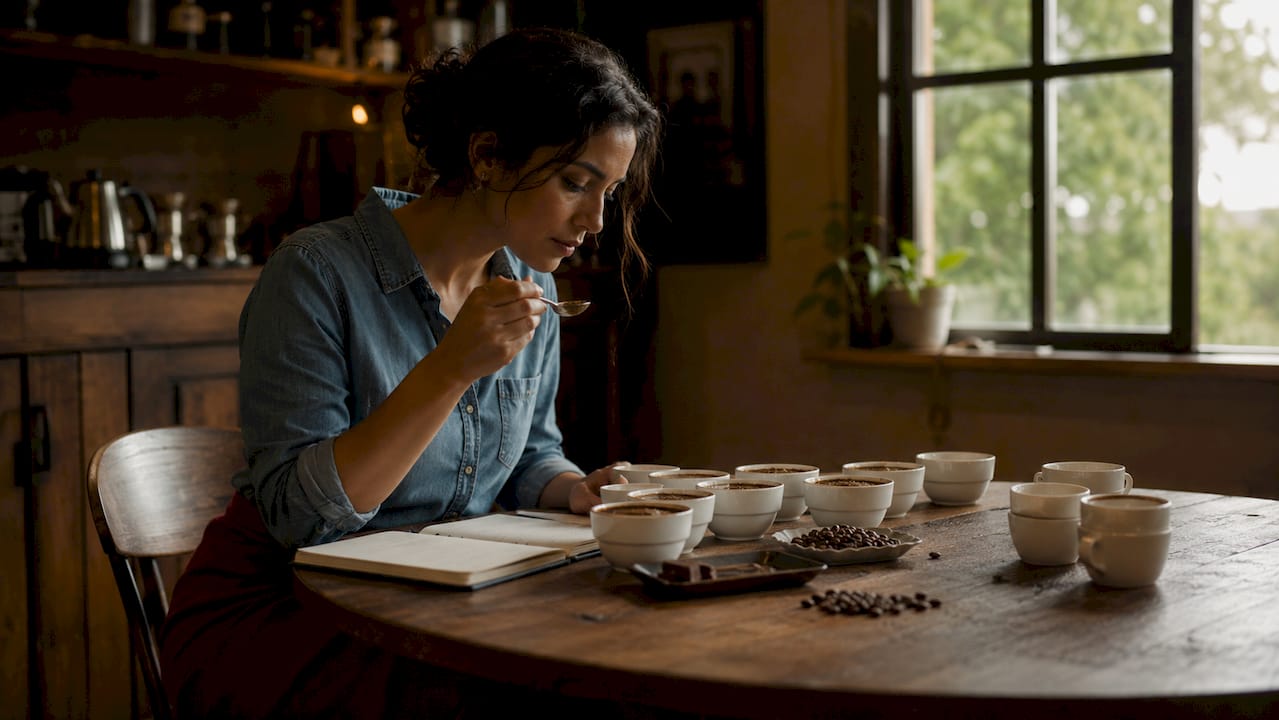
California is the emerging story. Farms in Ventura and San Diego counties grow specialty Arabica in microlots, relying on coastal fog and careful irrigation to compensate for the drier climate. Frinj Coffee, founded by Jay and Kristen Ruskey, pioneered commercial coffee growing in Southern California and proved the state could produce auction-grade specialty lots.
Puerto Rico has the longest coffee history of the three regions, with production dating back centuries. Hurricane Maria in 2017 devastated the island’s farms, but recovery programs including 750,000 seedlings distributed by Procafé have helped growers rebuild. Puerto Rican coffee carries a full body with chocolate and earthy notes, shaped by the island’s tropical mountain terrain.
Pro Tip: When buying Hawaiian coffee, check that the label says “100% Kona” rather than “Kona Blend.” Blends can legally contain as little as 10% Kona coffee, with the rest sourced from overseas.
2. top u.s. coffee producers worth knowing
The best coffee grown in the USA comes from a small group of farms and companies that prioritize traceability, cultivar selection, and processing quality. Here are the producers that define the category.
-
Frinj Coffee (California) Founded by Jay Ruskey, Frinj operates as a cooperative model connecting California coffee farmers with buyers. Their California Washed Geisha sold for $256 per kilogram at the 2026 Dubai Coffee Auction. That price places California coffee in the same tier as the world’s most celebrated lots from Ethiopia and Panama.
-
Kauai Coffee (Hawaii) The largest U.S. coffee estate covers over 3,100 acres on Kauai’s west side. Kauai Coffee offers single-origin estate lots alongside blended roasts, with full traceability back to specific farm blocks.
-
Greenwell Farms (Hawaii) One of Kona’s oldest family operations, Greenwell Farms has been growing and processing coffee since 1850. They offer estate-grown Kona in multiple processing styles, including natural and honey-processed lots.
-
Ruskey Family Farm (California) The founding farm behind California’s coffee movement, this Goleta-based operation grows Geisha, Typica, and SL28 cultivars on avocado and citrus farmland, demonstrating how intercropping builds resilience in U.S. coffee farms.
-
Mountain Thunder Coffee (Hawaii) A certified organic Kona producer that processes all coffee on-site. Mountain Thunder is known for its dark roasts and consistent lot quality year over year.
-
Hacienda San Pedro (Puerto Rico) One of Puerto Rico’s most recognized estates, producing coffee under the Yauco Selecto designation. Their beans carry a rich, chocolatey profile that reflects the island’s high-altitude growing zones.
-
Waialua Estate (Hawaii) Operated on Oahu’s North Shore, Waialua grows coffee alongside cacao, creating a diversified farm model that supports both crops through shared infrastructure and pest management.
-
Kona Earth (Hawaii) A small family farm in the Kona district focused on single-estate lots with full microlot transparency. Kona Earth publishes harvest dates, processing methods, and lot weights on every bag.
-
Catuai Tropical (Puerto Rico) A specialty producer in the central mountain region of Puerto Rico growing Catuai and Bourbon cultivars. Their washed-process lots are gaining recognition among specialty buyers.
-
Stonewall Farm (California) An emerging microlot producer in San Diego County growing Typica and Bourbon varieties. Stonewall represents the next wave of California farms pushing into specialty microlot territory.
3. how u.s. coffee flavors compare by region
U.S. grown coffee does not taste like a single thing. Flavor depends on regional terroir, cultivar choice, and processing method, and the differences between regions are significant enough to matter cup by cup.
| Region | Flavor Profile | Processing Style | Price Range |
|---|---|---|---|
| Kona, Hawaii | Smooth, mild, nutty, low acidity | Washed, natural | $30–$60 per 8 oz |
| Kauai, Hawaii | Bright, clean, light fruit notes | Washed, honey | $18–$35 per 12 oz |
| Southern California | Floral, complex, stone fruit, high clarity | Washed, natural | $50–$120+ per lot |
| Puerto Rico | Full body, chocolate, earthy, caramel | Washed | $20–$45 per 12 oz |
California’s Geisha lots sit at the top of the price and complexity spectrum. The cultivar produces jasmine, peach, and bergamot notes when grown in the right microclimate and processed with precision. That is why a California Washed Geisha can command the same auction prices as Panama Geisha, which has been the global benchmark for over a decade.
Kona coffee occupies a different space. It is consistent, approachable, and well-suited to medium and dark roasts. The volcanic soil delivers a clean cup with low bitterness, which is why it has maintained a loyal consumer base for generations.
Puerto Rican coffee sits between the two in terms of complexity. It rewards drinkers who prefer a heavier body and warmer flavor notes over the brightness of washed African or Central American coffees.
4. sustainable coffee farming practices in the u.s.
Sustainable production is not optional for U.S. coffee farmers. The margins are tight, the climate is challenging, and natural disasters can wipe out years of investment overnight.
The most effective practices U.S. farmers use include:
- Intercropping with avocado, cacao, and macadamia. Kona farmers use intercropping for pest control, specifically to manage coffee berry borer and leaf rust. Companion plants also provide shade, reduce soil erosion, and create secondary income streams.
- Water infrastructure investment. A 6.0-magnitude earthquake in Kona damaged water catchment systems across multiple farms in 2026. Water resilience planning matters more than temperature management for long-term farm viability in Hawaii.
- USDA financial support programs. The USDA’s Assistance for Specialty Crop Farmers program announced $1.625 billion in payments in 2026, with enrollment open through August 7, 2026. Coffee is explicitly included, giving U.S. growers access to cost-sharing that offsets the long maturation period between planting and first harvest.
- Emergency recovery programs. Puerto Rico’s Procafé and Hawaii’s USDA emergency cost-share programs provide direct support after hurricanes and earthquakes. Without these programs, many small farms would not survive a single major weather event.
Pro Tip: If you want to support sustainable U.S. coffee production directly, look for farms enrolled in USDA specialty crop programs. Many publish their program participation on their websites, which signals financial transparency and long-term commitment to the land.
5. how to identify authentic U.S.-Grown coffee
The premium price of American coffee makes it a target for mislabeling. Knowing how to read a bag correctly protects your money and supports the right farmers.
-
Look for state or territory identification. Authentic U.S. grown coffee will name the specific state or island. “Hawaii Coffee” is vague. “100% Kona, Big Island, Hawaii” is specific and verifiable.
-
Find the microlot or estate name. Lot-level traceability is the most reliable indicator of authentic origin. A bag that names the farm, the harvest date, and the processing method is almost always the real product.
-
Distinguish grown from roasted. Many bags say “Roasted in Hawaii” or “Roasted in California.” That tells you nothing about where the coffee was grown. The phrase you need is “Grown in” followed by a specific U.S. location.
-
Buy direct from the farm or a specialty roaster with sourcing transparency. Farms like Kona Earth and Greenwell Farms sell direct-to-consumer with full documentation. Specialty roasters who publish their sourcing relationships are the next best option.
-
Check for cultivar information. Bags that list the cultivar, whether Kona Typica, California Geisha, or Puerto Rican Catuai, signal a producer who understands what they are growing and why it matters. Generic labels rarely include this detail.
Key takeaways
U.S. grown coffee is a premium specialty product defined by geographic rarity, lot-level traceability, and regional terroir that produces flavors no imported coffee can replicate.
| Point | Details |
|---|---|
| Three growing regions | Hawaii, California, and Puerto Rico are the only U.S. states producing commercial coffee. |
| Production scale | The U.S. produces roughly 4.2 million pounds annually, far less than domestic demand. |
| Flavor varies by region | Kona is smooth and mild; California Geisha is floral and complex; Puerto Rico is full-bodied. |
| Traceability is the test | Look for farm name, harvest date, and cultivar on the label to verify authentic U.S. origin. |
| Federal support exists | The USDA’s specialty crop program includes coffee, helping small farms stay financially viable. |
Why u.s. coffee deserves more serious attention
By Jett
Most coffee enthusiasts I talk to treat U.S. grown coffee as a novelty. They buy a bag of Kona once, enjoy it, and then go back to their Ethiopian naturals or Colombian washed lots. That is a mistake, and I think it comes from a misunderstanding of what American coffee actually is.
California’s Geisha selling for $256 per kilogram at a Dubai auction is not a fluke. It is proof that the right cultivar, grown in the right microclimate, processed with precision, can compete with anything the world produces. The fact that it comes from Ventura County rather than Boquete, Panama, should not make it less interesting. If anything, it should make it more interesting.
What I find genuinely undervalued is Puerto Rico. The island’s coffee history predates Hawaii’s commercial production by over a century, and the mountain-grown lots from Yauco and the central highlands carry a depth that most consumers have never tasted. Post-hurricane recovery has been slow, but the farms that survived and rebuilt are producing some of the most honest, terroir-driven coffee available from any U.S. source.
My honest take is this: U.S. coffee is not trying to be the cheapest or the most accessible option. It is trying to be the most specific. When you buy a named microlot from a California farm or a 100% Kona estate bag, you are buying a product that could only come from one place on earth. That specificity is worth paying for, and it is worth seeking out before the next earthquake or hurricane changes the supply again.
— Jett
Explore roasts that match u.s. coffee flavor profiles
At Espritkaffe, we roast for people who care about what is in the cup. If the smooth, low-acid character of Kona speaks to you, our dark roast collection delivers that same clean, full-bodied experience from carefully sourced beans. If California’s bright, complex Geisha profile is more your speed, our light roast selection highlights the floral and fruit-forward notes that make specialty coffee worth drinking. For those who want to explore multiple origin profiles in one bag, the 6 Bean Blend brings together distinct terroirs in a single, balanced cup. Espritkaffe is built for the kind of drinker who already knows the difference between grown and roasted. This is your next step.
FAQ
What states grow coffee commercially in the u.s.?
Hawaii, California, and Puerto Rico are the only U.S. territories with commercial coffee production. Together they produce about 4.2 million pounds annually.
Is u.s. grown coffee better than imported coffee?
“Better” depends on what you value. U.S. grown coffee offers rare regional terroir and full traceability, with California Geisha lots fetching $256 per kilogram at international auctions, placing it among the world’s top specialty coffees.
How do i know if my coffee was actually grown in the u.s.?
Look for a specific state or territory name, a farm or estate name, and a harvest date on the label. Microlot-level traceability is the most reliable way to verify authentic U.S. origin.
Why is kona coffee so expensive?
Kona coffee is grown in a geographically limited district on Hawaii’s Big Island, hand-harvested, and produced in small quantities. The combination of volcanic soil, specific elevation, and labor costs drives the price well above commodity coffee.
Does the USDA support u.s. coffee farmers?
Yes. The USDA’s Assistance for Specialty Crop Farmers program explicitly includes coffee, with $1.625 billion in payments announced in 2026 to help growers manage financial risk and long crop maturation cycles.