

A black coffee bean is defined as any roasted coffee bean brewed and served without milk, sugar, or flavorings, making the bean itself the sole source of flavor. The Specialty Coffee Association recognizes this purity as the foundation of specialty coffee evaluation. Whether you brew drip, pour-over, French press, or espresso, the quality of the bean determines everything you taste. This guide covers what separates great beans from forgettable ones, how origin and roast shape your cup, and how to brew black coffee that actually tastes worth drinking.
What makes a black coffee bean different?
A black coffee bean is not a specific variety. It is any coffee bean prepared without additives, which means the bean’s origin, species, and roast level carry the full weight of flavor. That distinction matters more than most home brewers realize.
Two species dominate the market. Arabica beans, grown at higher elevations in regions like Ethiopia, Colombia, and Guatemala, deliver complex acidity, floral notes, and fruit-forward sweetness. Robusta beans, common in Vietnam and parts of Africa, produce a heavier body, lower acidity, and a grain-like bitterness. For black coffee, Arabica is the standard choice among specialty roasters because its flavor complexity rewards the absence of milk or sugar.
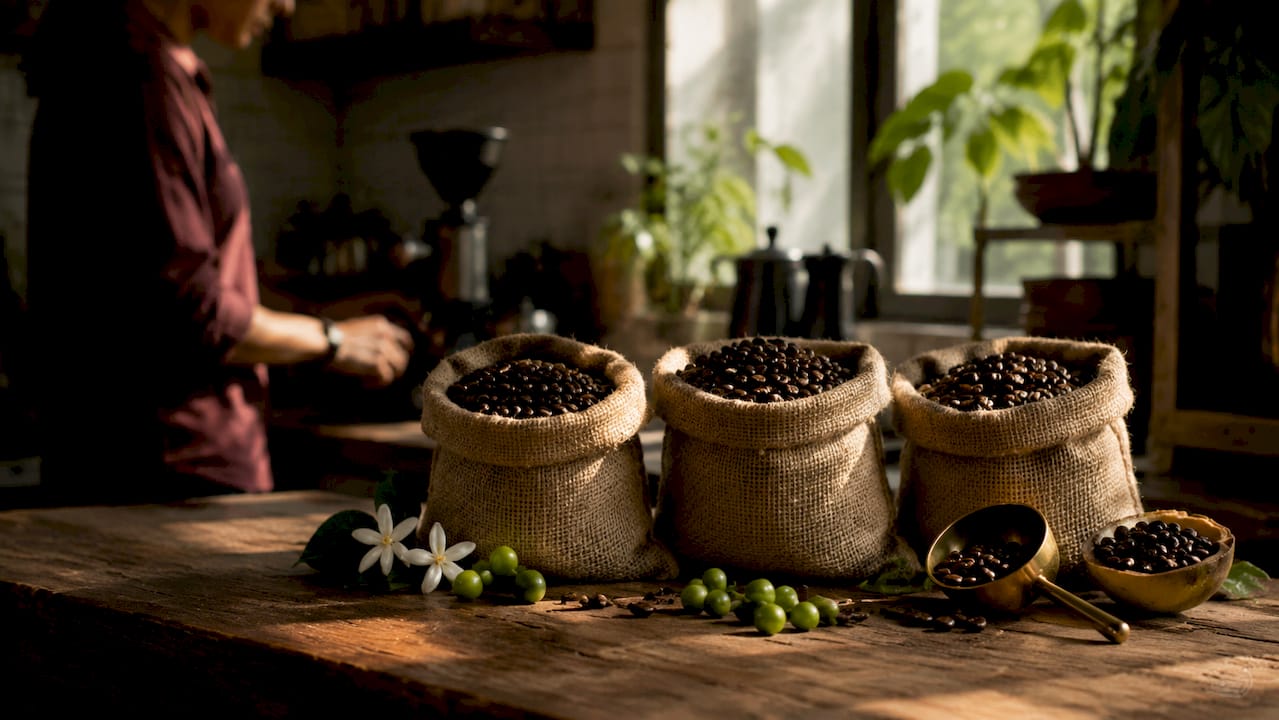
Roast level reshapes the bean’s natural character. Light roasts retain acidity and delicate fruit or floral notes. Medium roasts balance sweetness and body. Dark roasts develop chocolate and caramel flavors but can overpower the bean’s origin character. For black coffee, light to medium roasts are the most revealing choice.
Processing method also plays a defining role. Naturally processed beans dry with the fruit intact, which imparts natural sweetness and a heavier body. That added sweetness makes black coffee more approachable without any additives. Washed beans taste cleaner and brighter, with sharper acidity and less body.
Origin flavor profiles at a glance
| Origin | Roast Level | Flavor Notes |
|---|---|---|
| Ethiopian Yirgacheffe | Light | Citrus, jasmine, bergamot |
| Brazilian Santos | Medium to Dark | Chocolate, nuts, low acidity |
| Sumatran Mandheling | Medium to Dark | Earthy, cedar, full body |
| Colombian Huila | Medium | Caramel, red fruit, balanced |
| Guatemalan Antigua | Medium | Brown sugar, cocoa, mild spice |
Pro Tip: Single-origin beans from Ethiopia or Colombia reveal the most distinct flavor when brewed black. Blends are designed to be consistent, not expressive.
How does brewing method affect black coffee taste?
The brewing method you choose changes how flavor compounds extract from the bean. Water temperature, contact time, and grind size all shift the final cup in measurable ways.
Here is how the most common methods compare:
- Drip coffee: Consistent extraction, medium body, approachable acidity. Best for everyday drinking with medium roast beans.
- Pour-over (Hario V60, Chemex): High clarity, bright acidity, and pronounced origin character. Ideal for light roast, single-origin beans.
- French press: Full immersion produces heavy body and low clarity. Best with medium to dark roasts where texture matters.
- AeroPress: Versatile and forgiving. Produces concentrated, espresso-adjacent coffee with short brew times.
- Cold brew: Long steep (12–24 hours) at room temperature or cold. Produces low-acidity, naturally sweet concentrate. Works well with dark roast beans.
- Espresso: High pressure, short extraction. Produces intense, concentrated coffee that qualifies as black when served without milk.
Brewing parameters that matter
| Method | Water Temp (°F) | Grind Size | Brew Time |
|---|---|---|---|
| Pour-over | 195–205 | Medium-fine | 3–4 minutes |
| French press | 195–205 | Coarse | 4 minutes |
| AeroPress | 175–205 | Medium-fine | 1–2 minutes |
| Cold brew | 65–70 | Coarse | 12–24 hours |
| Espresso | 195–205 | Fine | 25–30 seconds |
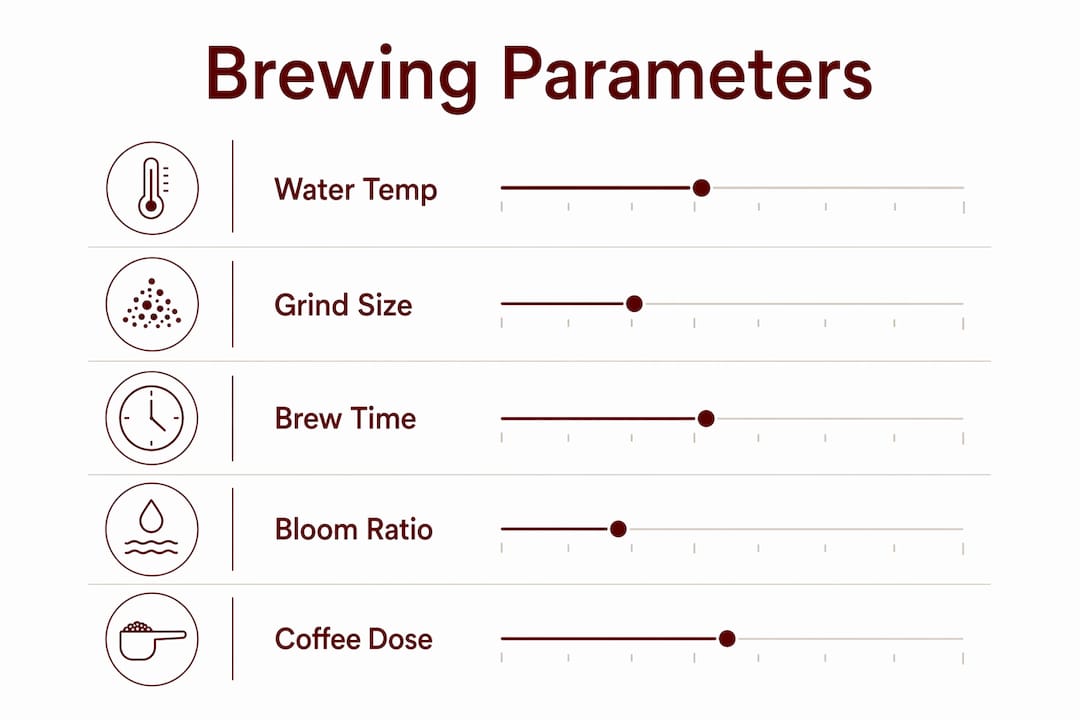
Water temperature is the variable most home brewers ignore. Water below 195°F under-extracts, producing sour, thin coffee. Water above 205°F over-extracts, pulling bitter compounds. Both problems are common and both are easy to fix with a simple kettle thermometer.
Pro Tip: For pour-over, bloom the grounds with twice their weight in water for 30 seconds before the full pour. This releases CO2 and produces a noticeably cleaner, more even extraction.
How do you choose the best black coffee beans?
Freshness is the single most important factor when sourcing beans. Coffee begins losing its best volatile compounds within weeks of roasting. Buying from a roaster that prints the roast date on the bag is non-negotiable for quality black coffee.
Specialty coffee brands and subscription services are the most reliable way to access freshly roasted, high-quality beans with documented origins. Services that ship within days of roasting give you a meaningful advantage over grocery store options, which often sit on shelves for months.
Here is a quick sourcing checklist before you buy:
- Check the roast date. Aim to brew beans within 2–6 weeks of roasting.
- Look for single-origin labeling. It signals transparency and traceability.
- Identify the processing method. Natural process for sweetness and body; washed for clarity and brightness.
- Choose roast level by brewing method. Light for pour-over, medium for drip, dark for French press or cold brew.
- Prioritize specialty grade. The Specialty Coffee Association grades beans on a 100-point scale. Anything scoring 80 or above qualifies as specialty.
Beginners often buy over-roasted supermarket coffee and conclude that black coffee tastes harsh. That conclusion is wrong. Harsh bitterness comes from low-quality or stale beans, not from drinking coffee without milk. A freshly roasted, specialty-grade bean brewed correctly tastes nothing like the bitter cup most people associate with black coffee.
For exploring single-origin flavor profiles, starting with a Brazilian bean is a smart move. Brazilian beans score well for consistency and deliver a low-acid, chocolatey cup that most palates find approachable. From there, moving to Ethiopian or Peruvian origins expands your flavor vocabulary quickly. Espritkaffe’s Peruvian coffee guide is a useful reference for understanding how altitude and processing interact in high-quality South American beans.
What are the real health benefits of black coffee?
Black coffee is one of the most antioxidant-rich beverages in the average American diet. It contains chlorogenic acids, which research links to reduced inflammation and improved glucose metabolism. A standard 8-ounce cup contains roughly 2 calories, making it one of the few genuinely low-calorie beverages that delivers a measurable metabolic effect.
The caffeine question is more nuanced than most people expect. Dark roast beans have similar caffeine to light roast beans when measured by volume. Roasting reduces bean mass and moisture, which concentrates caffeine by weight in darker roasts. But when you measure by the scoop, the difference is negligible. The perceived intensity of dark roast coffee comes from chemical changes during roasting, not from higher caffeine content.
Roasting chemistry changes flavor complexity and perceived strength more than caffeine differences do. A light roast is not weaker. It is different.
This matters for home brewers who choose dark roast for the caffeine boost. The boost is real, but the source is the bean species and brew ratio, not the roast level. Robusta beans contain roughly twice the caffeine of Arabica. If caffeine output is your goal, bean species matters far more than roast color.
Drinking black coffee also removes the caloric load of cream and sugar, which adds up fast. Two tablespoons of half-and-half and two teaspoons of sugar add roughly 70 calories per cup. For daily drinkers, that difference compounds significantly over time.
Key takeaways
The best black coffee starts with freshly roasted, specialty-grade beans chosen by origin and processed to match your preferred flavor profile.
| Point | Details |
|---|---|
| Bean origin defines flavor | Ethiopian beans taste citrusy and floral; Brazilian beans taste chocolatey and low-acid. |
| Roast level shapes the cup | Light roasts preserve origin character; dark roasts develop body and reduce acidity. |
| Processing method matters | Naturally processed beans add sweetness and body that make black coffee more approachable. |
| Freshness is non-negotiable | Buy beans with a printed roast date and brew within 2–6 weeks for peak flavor. |
| Caffeine follows species, not roast | Robusta contains roughly twice the caffeine of Arabica regardless of roast level. |
Why i think most people give up on black coffee too soon
I spent years defaulting to milk and sugar before I understood what I was actually tasting. The bitterness I was trying to cover up was not the coffee. It was the roast date. The beans I was buying had been sitting in a warehouse for months before they hit the shelf.
The shift happened when I tried a naturally processed Ethiopian Yirgacheffe from a local roaster, brewed as a pour-over, two weeks off roast. It tasted like blueberries and dark chocolate. No additives. No bitterness. That cup changed how I thought about what black coffee could be.
What I have found is that most people who dislike black coffee simply haven’t found their flavor profile. They tried one bad cup and wrote off the entire category. The fix is not technique. It is sourcing. Get a freshly roasted, fruit-forward naturally processed bean and brew it with clean water at the right temperature. The coffee does the rest.
My recommendation for anyone new to black coffee: start with a medium roast Brazilian or Colombian single-origin. Both are forgiving, low-acid, and naturally sweet. Once you are comfortable there, move toward lighter roasts from Ethiopia or Peru. That progression builds your palate without overwhelming it. Exploring coffee assorted packs is one of the fastest ways to map your preferences without committing to a full bag of something you may not enjoy.
The investment in quality beans pays off faster than any brewing equipment upgrade. A $40 grinder and a $15 bag of fresh specialty beans will outperform a $200 machine loaded with stale grocery store coffee every single time.
— Jett
Explore premium roasts at Espritkaffe
Espritkaffe roasts for people who want to taste what the bean actually is. Every product ships with a clear roast profile and origin story, so you know exactly what you are brewing.
For home brewers who want something unexpected, Espritkaffe’s mushroom medium roast blends specialty-grade beans with functional mushrooms for a cup that is smooth, grounded, and clean. The dark roast mushroom blend delivers a bolder, richer profile for those who prefer depth over brightness. If convenience matters, the cold brew option brings low-acid, naturally sweet black coffee without any brewing setup. Espritkaffe is built for the cup you actually want, not the one everyone else is drinking.
FAQ
What is a black coffee bean exactly?
A black coffee bean is any roasted coffee bean brewed and served without milk, sugar, or flavorings. The term describes the preparation style, not a specific bean variety or roast level.
Does dark roast coffee have more caffeine than light roast?
Dark roast and light roast have similar caffeine levels when measured by volume. The perceived strength of dark roast comes from roasting chemistry, not higher caffeine content.
What is the best brewing method for black coffee?
Pour-over produces the clearest, most origin-expressive cup for black coffee. French press works best for those who prefer a heavier body and fuller texture.
How do i make black coffee taste less bitter?
Use freshly roasted specialty-grade beans, brew with water between 195–205°F, and choose a light to medium roast. Bitterness in black coffee almost always traces back to stale or low-quality beans, not the absence of additives.
Are naturally processed beans better for black coffee?
Naturally processed beans add sweetness and body that make black coffee more approachable without any additives. They are a strong starting point for anyone transitioning away from milk and sugar.