

Dialing in espresso is the process of adjusting your brewing variables, specifically grind size, dose, yield, and extraction time, to produce a balanced, flavorful shot every time. The 2026 industry baseline for a double shot is an 18g dry dose extracted to 36g liquid yield in 25–30 seconds, a 1:2 ratio that applies primarily to medium-roast blends. Mastering how to dial in an espresso shot perfectly separates inconsistent, frustrating pulls from shots that taste exactly the way they should. The good news: the process is repeatable, learnable, and deeply satisfying once you understand the variables at play.
What tools do you need to dial in espresso perfectly at home?
Getting the right equipment in place before you pull a single shot saves time and wasted coffee. Three tools matter more than anything else.
The burr grinder is non-negotiable. A quality burr grinder produces uniform particle size, which is the foundation of even extraction. Blade grinders create wildly inconsistent grounds, and inconsistent grounds mean you cannot isolate grind size as a variable when troubleshooting. You need a grinder that lets you make small, repeatable adjustments. Understanding the full grind size spectrum helps you move with confidence rather than guessing.
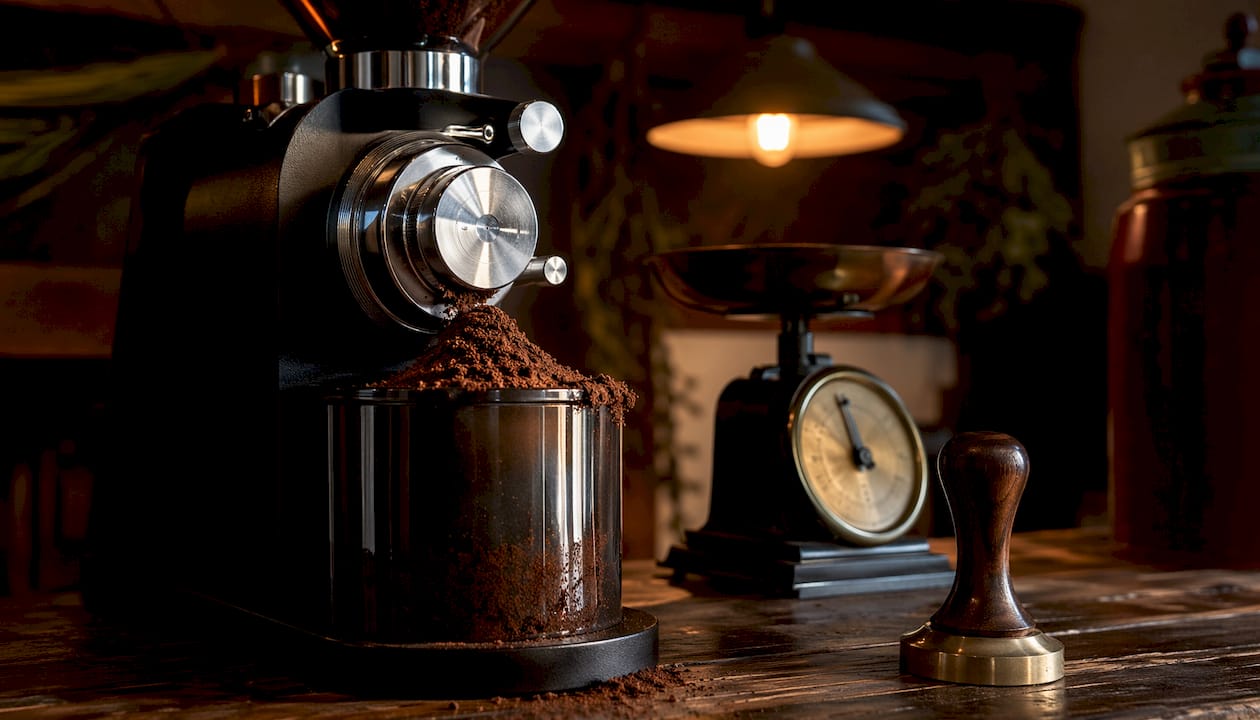
A digital scale eliminates the biggest source of error. Weighing both dose and yield every single pull removes the guesswork that eyeballing creates. A basic digital scale handles this job well. Without it, you cannot know whether a bad shot came from the grind or from an inconsistent dose.
Your espresso machine needs to be ready to work with you. Pressure, temperature stability, and basket size all affect extraction. A standard 58mm double basket pairs with an 18g dose for most home setups. Beyond the machine itself, you need a flat tamper, a distribution tool or WDT (Weiss Distribution Technique) needle, and a shot timer.
Here is a quick reference for the core tools:
| Tool | Purpose | Why it matters |
|---|---|---|
| Burr grinder | Uniform particle size | Controls extraction rate and flavor |
| Digital scale | Dose and yield measurement | Removes inconsistency from variables |
| Shot timer | Tracks extraction time | Confirms grind adjustment direction |
| Tamper | Compresses coffee puck evenly | Prevents channeling |
| Distribution tool | Levels grounds before tamping | Promotes even water flow |
- Fresh beans stored in an airtight container away from light and heat extract more predictably than stale ones.
- Beans roasted within the past two to four weeks perform best for espresso.
- Avoid freezing and thawing repeatedly, as moisture changes affect grind behavior.
Pro Tip: Warm your portafilter by locking it into the group head while the machine heats up. A cold portafilter drops the brew temperature and introduces sour notes that have nothing to do with your grind.
How do you dial in an espresso shot step by step?
The four-shot protocol is the most reliable method for home baristas learning to fine-tune their shots. It works by isolating one variable at a time and using both timing and taste to guide each adjustment.
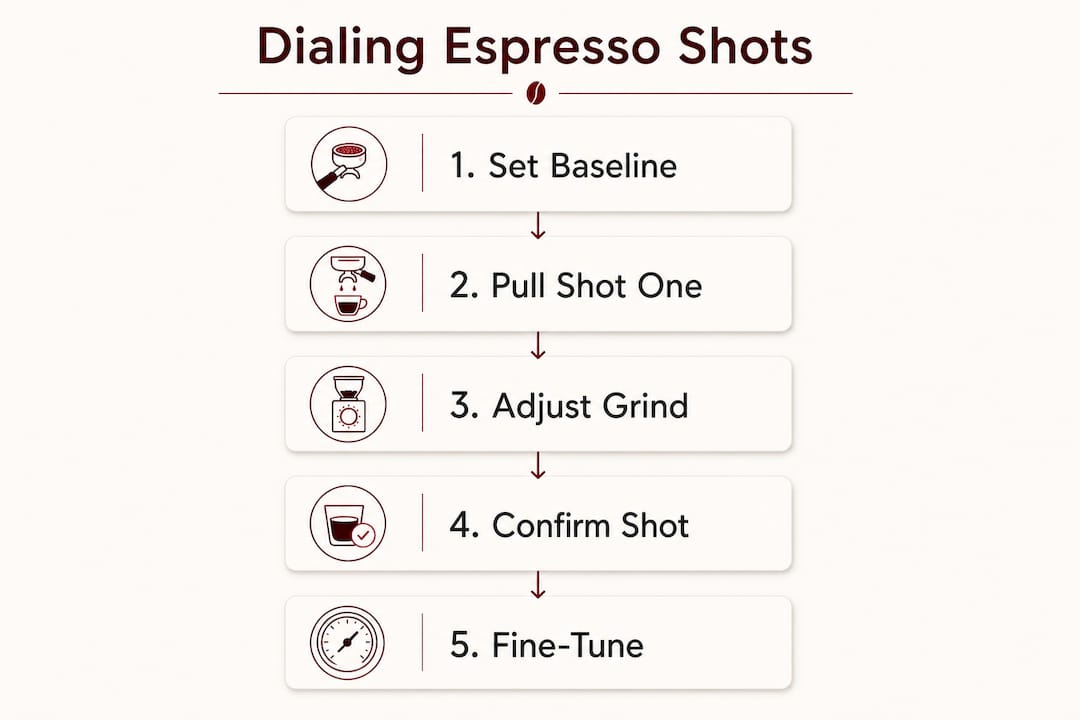
Step 1: Set your baseline
Start with the standard parameters: 18g dose, target 36g yield, water temperature at 93°C (200°F), and a grind size that feels slightly finer than table salt. Lock these in before pulling anything.
Step 2: Pull shot one and record everything
Start your timer the moment you press brew. Note the total extraction time and the actual yield on your scale. Extraction time acts as a diagnostic, not a target. It tells you whether your grind needs to go finer or coarser.
Step 3: Adjust grind size based on time and taste
- Shot finishes in under 20 seconds: grind finer to slow the flow.
- Shot finishes over 35 seconds: grind coarser to speed it up.
- Shot tastes sour: under-extracted, likely too fast or too coarse.
- Shot tastes bitter: over-extracted, likely too slow or too fine.
- Shot tastes both sour and bitter: channeling, not a grind issue.
Make one grind adjustment, purge a few grams of grounds through the grinder to clear the old setting, then pull shot two.
Step 4: Confirm with shot three and fine-tune
Shot three should land in the 25–30 second window and taste balanced. If timing is correct but flavor still feels off, make a small yield adjustment. Pulling to 38g instead of 36g opens up sweetness. Pulling to 34g tightens body and reduces bitterness. Temperature adjustment comes last, after grind and yield are locked.
Pro Tip: Always purge your grinder after changing the setting. The grounds sitting in the chute are from the old setting and will skew your next shot.
Home barista brewing techniques consistently reinforce this single-variable rule: change one thing at a time and you will always know what caused the improvement.
What are the most common espresso dialing mistakes?
Most dialing problems come from a small set of repeatable errors. Recognizing them early saves beans and frustration.
Changing multiple variables at once is the most common mistake. If you adjust grind size, dose, and temperature in the same pull, you cannot know which change fixed or broke the shot. Stick to one adjustment per shot.
Channeling ruins shots that would otherwise be fine. Shots tasting both sour and bitter almost always indicate channeling, where water finds a path of least resistance through the puck rather than flowing evenly. The fix is puck preparation, not grind adjustment. Use a WDT tool to distribute grounds evenly, then tamp level with consistent pressure.
A cold machine introduces temperature errors. A 15–20 minute warm-up of both the machine and portafilter is required for thermal stability. Cold equipment drops brew temperature by 2–3°C, producing sour shots even when the grind is correct.
| Symptom | Likely cause | Fix |
|---|---|---|
| Sour, fast shot | Grind too coarse | Grind finer |
| Bitter, slow shot | Grind too fine | Grind coarser |
| Sour and bitter together | Channeling | Fix puck prep first |
| Inconsistent shot to shot | Cold equipment or uneven dose | Warm up machine, weigh every shot |
| Flat, thin flavor | Stale beans | Use fresher beans |
- Stale beans extract unpredictably and produce flat, lifeless shots regardless of grind setting.
- Uneven tamping creates pressure gaps that water exploits.
- Skipping the scale makes it impossible to diagnose dose-related problems.
Pro Tip: If you are getting channeling, run your finger across the grounds in the basket before tamping. You should feel a perfectly level, even surface. Any mounds or valleys will channel.
How does taste guide you to the perfect extraction?
Numbers tell you where to look. Your palate tells you what to fix. Ideal extraction extracts roughly 18–22% of the soluble coffee solids, producing sweetness, complexity, and a clean finish. That range is a target, not a guarantee. Two shots with identical timing can taste completely different depending on bean origin, roast level, and puck prep.
Learning to read flavor cues is the skill that separates good home baristas from great ones. Sourness signals under-extraction. The acids in the coffee have not been balanced by the sweeter, more soluble compounds. Bitterness signals over-extraction. The desirable compounds have been pulled, and now the harsh ones are following. Astringency, a dry, puckering sensation, also points to over-extraction or channeling.
“Your palate is the ultimate judge for dialing in. Numbers serve as a framework, but flavor balance and mouthfeel are what actually matter. A shot that hits 27 seconds but tastes flat needs adjustment just as much as one that runs in 18.”
Mouthfeel gives you a second layer of information. A well-extracted shot feels syrupy and coats the tongue. An under-extracted shot feels thin and watery. An over-extracted shot feels dry and rough. Use both flavor and texture together when deciding what to change.
Keeping a simple tasting log accelerates the learning curve significantly. Write down grind setting, dose, yield, time, and two or three words describing the taste after every pull. Patterns emerge quickly. You will start to recognize your grinder’s sweet spot for each bean you use. For a deeper approach to reading your cup, the sensory evaluation guide from Espritkaffe covers flavor mapping in detail.
Dialing in is an ongoing process. Every new bag of beans, every humidity change, and every grinder cleaning means you start the process again. That is not a flaw in the method. It is the nature of working with a living, changing ingredient.
Key Takeaways
Dialing in espresso perfectly requires fixing your dose and yield, then adjusting grind size one increment at a time while using taste, not just timing, to confirm each change.
| Point | Details |
|---|---|
| Start with the baseline | Use 18g dose, 36g yield, and 25–30 seconds as your starting framework. |
| Grind size drives timing | Adjust grind finer to slow the shot, coarser to speed it up. |
| Taste overrides numbers | Sour means under-extracted; bitter means over-extracted; both together means channeling. |
| One variable at a time | Changing multiple settings per shot makes it impossible to identify the cause of improvement. |
| Dial in every new bag | Fresh beans and environment changes require re-tuning even when your last bag was perfect. |
What I have learned from pulling hundreds of shots at home
The biggest mistake I made early on was treating dialing in as a one-time task. I would nail a bag of beans, feel satisfied, open a new bag two weeks later, and wonder why everything fell apart. Dialing in is continuous. Accepting that changed everything for me.
The second thing I got wrong was underestimating the grinder. I spent money on a better machine before upgrading my grinder, and the shots barely improved. The moment I switched to a proper burr grinder, the difference was immediate and obvious. If you are choosing between a better machine and a better grinder, buy the grinder first. Every time.
Patience is the actual skill here. Not technique, not equipment, patience. The four-shot protocol works, but only if you resist the urge to change three things at once when a shot tastes wrong. Slow down, write it down, change one thing, and pull again. The shot you are chasing is closer than you think. It usually only takes a few grams of grind adjustment to get there.
One more thing: do not ignore the flavor notes in your beans. A light roast and a dark roast do not dial in the same way. Dark roasts extract faster and often taste best at a slightly shorter yield. Light roasts need more time and a longer ratio to open up their complexity. Let the bean tell you what it wants.
— Jett
Espritkaffe beans built for the way you brew
Dialing in a shot perfectly starts with beans that give you something worth dialing in. Espritkaffe roasts to order, which means the coffee in your bag is fresh enough to actually respond to your adjustments.

The medium roast hits the sweet spot for the 1:2 ratio baseline, with enough body to hold up through a 27-second pull and enough clarity to let you read your extraction by taste. For enthusiasts who prefer a bolder, denser shot, the dark roast rewards a slightly shorter yield and a coarser grind. Both roasts are built for the kind of intentional, focused brewing that dialing in demands. Your technique deserves beans that meet it at the same level.
FAQ
What is the standard espresso dose and yield for dialing in?
The standard starting point is an 18g dry dose extracted to 36g liquid yield, a 1:2 ratio, in 25–30 seconds. This baseline applies best to medium-roast blends.
How do I know if my espresso is under-extracted or over-extracted?
A shot finishing in under 20 seconds and tasting sour is under-extracted. A shot finishing over 35 seconds and tasting bitter is over-extracted. Adjust grind size by one increment in the appropriate direction.
Why does my espresso taste both sour and bitter at the same time?
Simultaneous sour and bitter flavor almost always indicates channeling, where water flows unevenly through the puck. Fix your puck distribution and tamping technique before adjusting the grinder.
How often do I need to re-dial my espresso?
Every new bag of beans requires a fresh dial-in, even from the same roaster. Changes in humidity, bean age, and grinder wear also shift extraction behavior over time.
Does water temperature affect espresso dialing?
Yes. A machine that has not warmed up fully can drop brew temperature by 2–3°C, causing sour shots that have nothing to do with grind size. Allow 15–20 minutes for full thermal stability before pulling your first shot.