

Italian blend coffee is a roasting and blending style, not a geographic origin, defined by dark or medium-dark roasted beans combined from multiple growing regions to produce a bold, smooth espresso with rich crema and low acidity. The term “Italian blend” describes a method, not a birthplace. The style typically combines Arabica and Robusta beans in a 60–80% Arabica and 20–40% Robusta ratio, calibrated to deliver the thick body and persistent crema that Italian espresso culture demands. If you’ve been chasing that café-quality cup at home, understanding what actually goes into this blend is where it starts.
What beans and roast profiles compose the ideal Italian blend coffee?
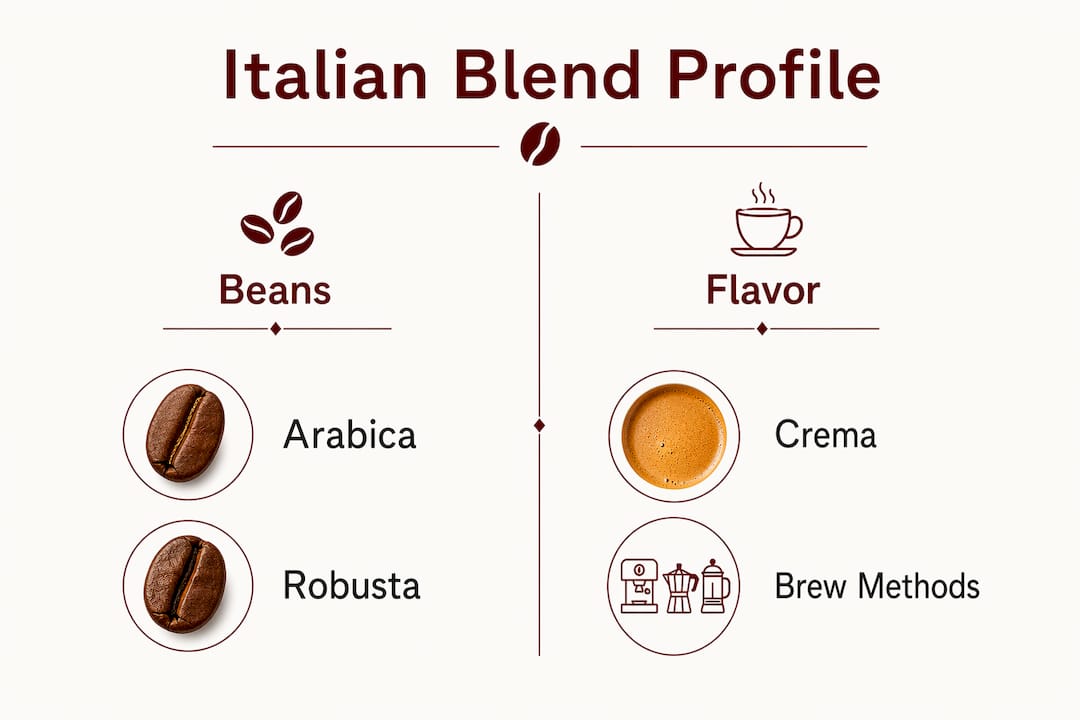
The foundation of any authentic Italian espresso blend is the Arabica-to-Robusta ratio. Arabica contributes sweetness, floral aroma, and complexity. Robusta adds body, caffeine, and the thick crema that defines Italian espresso. The Arabica and Robusta ratio directly shapes every sensory quality in the cup, from mouthfeel to foam persistence.
| Bean ratio | Arabica % | Robusta % | Flavor outcome |
|---|---|---|---|
| Arabica-forward | 80% | 20% | Sweeter, more aromatic, lighter body |
| Balanced | 70% | 30% | Full body, moderate crema, balanced bitterness |
| Robusta-forward | 60% | 40% | Bold, thick crema, higher caffeine, intense |
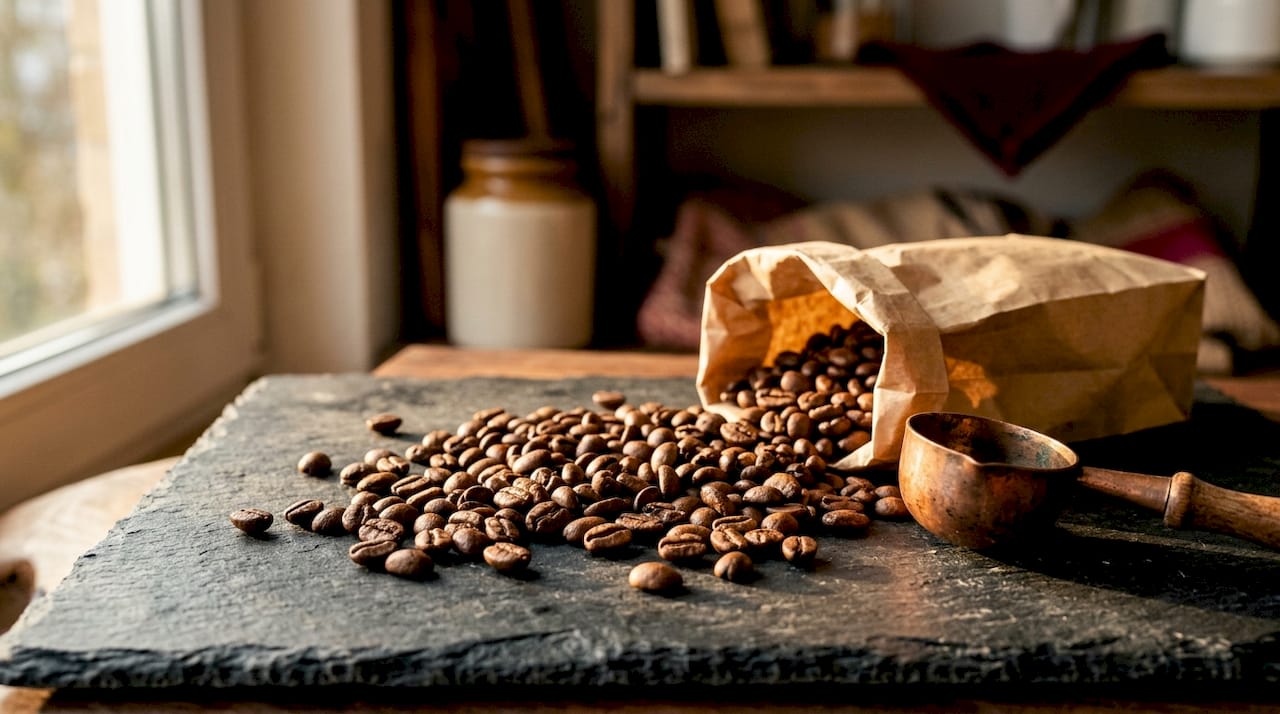
Roast level matters as much as bean ratio. Most Italian blends land between medium-dark and dark roast, which caramelizes the natural sugars in the bean and reduces acidity. Precision roasting at dark levels retains sweetness and complexity without producing burnt or charcoal notes. That distinction separates a quality Italian roast from a cheap imitation.
Key factors that shape the roast profile:
- Roast level: Medium-dark to dark, targeting internal bean temperatures that caramelize without carbonizing
- Bean origin mix: Blends typically draw from Central America, Brazil, and Southeast Asia for consistency
- Roast uniformity: Even heat distribution prevents scorched outer layers with underdeveloped centers
- Resting time: Freshly roasted beans need 3–7 days of degassing before brewing for peak flavor
Pro Tip: Buy beans roasted within the past two weeks. Italian-style roasts go stale faster than lighter roasts because the cell structure opens up more during the roasting process, releasing CO2 and flavor compounds quickly.
What flavor profiles define Italian blend coffee?
The Italian coffee flavor profile centers on cocoa, caramel, toasted nuts, and dried fruit, with a full-bodied mouthfeel that coats the palate. Chocolate, caramel, and spice notes are the signature descriptors, and they come directly from the dark roast process acting on the sugars and oils in the bean. This is not a subtle, tea-like cup. It is bold, structured, and built for espresso.
Common flavor descriptors in a well-made Italian espresso blend:
- Cocoa and dark chocolate: From Robusta content and dark roasting
- Caramel and brown sugar: From Maillard reactions during roasting
- Toasted hazelnuts and almonds: A signature mid-palate note
- Dried fruit: Figs or raisins, more present in higher-Arabica blends
- Toasted spice: Subtle cinnamon or clove in the finish
The crema is the most visible marker of a quality Italian blend. Robusta content enhances caffeine and crema persistence, producing the thick, reddish-brown foam that holds its structure for 60–90 seconds after pulling a shot. That crema is not decorative. It traps aromatic compounds and delivers them on the first sip, which is why Italian espresso tastes more intense than its volume suggests.
The blend also performs well in milk-based drinks. The bold base cuts through steamed milk in a cappuccino or latte without disappearing. A lighter single-origin Arabica would lose its character entirely under the same conditions.
How to brew Italian blend coffee authentically at home
Authentic home brewing of an Italian espresso blend requires either an espresso machine or a moka pot. Both methods extract the oils and compounds that define the style. Drip brewing and pour-over methods produce a fundamentally different cup because they lack the pressure or concentration needed to replicate the Italian espresso experience.
Espresso machine method
- Grind fresh: Use a burr grinder set to fine. Pre-ground coffee loses volatile aromatics within 15–30 minutes of grinding.
- Dose correctly: Use 18–20 grams of ground coffee for a double shot basket.
- Tamp evenly: Apply 30 pounds of pressure with a level tamp to prevent channeling.
- Target a 1:2 ratio: A 1:2 extraction ratio for espresso means 18 grams of coffee yields 36 grams of liquid espresso in 25–30 seconds.
- Check the crema: A properly extracted shot shows a reddish-brown crema that holds for at least 60 seconds.
Moka pot method
The moka pot is the traditional Italian home brewing tool, and it produces a concentrated coffee that sits between espresso and drip in strength. Moka pot coffee is stronger than drip brewing and capable of producing a crema emulsion when used with fresh, finely ground beans.
- Fill the bottom chamber with cold water to just below the pressure valve.
- Fill the filter basket with ground coffee, leveled but not tamped.
- Assemble the pot and place it on medium-low heat.
- Watch for the bubbling sound as coffee rises into the upper chamber.
- Remove from heat the moment bubbling begins. Do not let it boil.
Pro Tip: Removing the moka pot from heat at the first sign of bubbling is the single most important step. Letting it continue on the burner boils the coffee, which destroys the aromatic compounds and produces the harsh bitterness that gives moka pot coffee a bad reputation.
The grind size matters for both methods. Too coarse and the water passes through too fast, producing a weak, sour shot. Too fine and you get over-extraction, which tastes bitter and dry. For an espresso machine, aim for a grind that resembles fine table salt. For a moka pot, slightly coarser works better.
How does Italian coffee culture shape the home brewing experience?
Italian coffee culture treats the cup as a ritual tied to specific times of day, not a continuous habit. Coffee rituals and timing are central to the Italian approach, and understanding this context changes how you experience the blend at home. Adopting even a fraction of this structure improves your appreciation of the coffee itself.
The Italian approach pairs specific drinks with specific moments:
- Espresso: Any time of day, consumed standing at the bar in 2–3 sips
- Cappuccino: Morning only, paired with a cornetto or pastry before 11:00 AM
- Ristretto: A shorter, more concentrated shot, often after a heavy meal
- Macchiato: Mid-morning or afternoon, espresso with a small amount of steamed milk
- Caffè lungo: A longer pull, milder than espresso, suited to slower mornings
This timing is not arbitrary. Milk-heavy drinks are avoided after meals because Italians treat them as breakfast foods, not digestifs. A ristretto after dinner is the culturally correct choice because its concentration and low volume aid digestion without adding dairy. Applying this logic at home means you get more from each cup because you are drinking the right drink at the right moment.
For food pairings, the bold profile of an Italian blend matches well with dark chocolate, almond biscotti, aged cheeses, and cured meats. The bitterness in the coffee cuts through fat, and the caramel notes in the blend complement sweet pastries without competing. You can also match your coffee with your daily schedule to get the most from each brewing session.
Learning more about Italian coffee culture deepens the context behind every cup you brew at home.
Key Takeaways
Italian blend coffee is defined by its Arabica-to-Robusta ratio and dark roast precision, not by where the beans were grown, and mastering this distinction is the foundation of every great cup.
| Point | Details |
|---|---|
| Style, not origin | “Italian blend” describes a roasting and blending method, not a bean’s geographic source. |
| Bean ratio drives flavor | A 70/30 Arabica-to-Robusta split delivers the best balance of sweetness, body, and crema. |
| Roast precision matters | Dark roasts must retain sweetness; burnt notes signal poor-quality beans or over-roasting. |
| Brewing method is non-negotiable | Espresso machines and moka pots are the only methods that replicate the authentic Italian profile. |
| Timing elevates the ritual | Matching the right Italian drink to the right moment improves both flavor appreciation and enjoyment. |
Why most home brewers get Italian blend coffee wrong
The biggest mistake I see is treating “Italian” as a flavor guarantee rather than a starting point. People buy a bag labeled “Italian roast,” pull a shot, and wonder why it tastes flat or harsh. The label tells you the style. The beans, the roast quality, and your brewing execution determine whether that style actually shows up in the cup.
The second mistake is skipping the Robusta entirely. I understand the appeal of 100% Arabica. It sounds premium. But a pure Arabica espresso lacks the crema persistence and body that make Italian espresso what it is. The balance between bitterness and sweetness in a quality Italian blend comes from expert blending, not from using only the “better” bean. Robusta earns its place in this style.
The third issue is heat management, especially with moka pots. Most people run them too hot for too long. The result is a bitter, over-extracted cup that they blame on the blend. The blend is fine. The technique is the problem.
My honest recommendation: treat your first few attempts as calibration, not failure. Adjust one variable at a time. Change the grind, then the dose, then the heat. Keep notes. The Italian espresso style rewards patience and attention in a way that drip coffee never demands.
— Jett
Espritkaffe’s dark and medium roasts for Italian-style brewing
Espritkaffe roasts coffee for people who take their cup seriously. If the Italian blend profile speaks to you, the dark roast options at Espritkaffe deliver the bold body and low acidity that define the style, while the medium roast offers a slightly sweeter, more aromatic entry point for those who want complexity without maximum intensity.

Every roast ships fresh, with packaging designed to preserve the volatile aromatics that matter most in the first two weeks after roasting. Espritkaffe’s approach is simple: your order, your roast, your coffee. No generic blends sitting on a shelf for months. If you want a cup that reflects the Italian espresso tradition without compromise, the roast selection at Espritkaffe is the place to start.
FAQ
What is Italian blend coffee exactly?
Italian blend coffee is a roasting and blending style defined by dark or medium-dark roasted beans combined from multiple origins, typically in a 60–80% Arabica and 20–40% Robusta ratio. The term describes technique, not bean origin.
Why does Italian blend coffee have more crema than other espresso?
The Robusta content in Italian blends produces thicker, more persistent crema than pure Arabica espresso. Robusta beans contain more of the proteins and oils that form the foam layer during high-pressure extraction.
Can I brew Italian blend coffee without an espresso machine?
A moka pot is the traditional Italian home alternative to an espresso machine. It produces a concentrated, full-bodied cup close to espresso in strength, though without the same crema volume as a machine-pulled shot.
Is Italian roast coffee the same as French roast?
Italian roast and French roast are both dark roasts, but Italian roast typically stops slightly before French roast on the roasting curve. French roast goes darker, producing more smokiness and less of the caramel sweetness that defines the Italian style.
How do I avoid bitterness when brewing Italian blend coffee at home?
Use freshly ground beans, maintain a 1:2 extraction ratio on an espresso machine, and remove a moka pot from heat the moment bubbling starts. Over-extraction and excessive heat are the two primary causes of harsh bitterness in Italian-style coffee.