

European espresso is a concentrated coffee beverage brewed by forcing hot water under high pressure through finely ground coffee, producing a small, intense shot topped with golden crema. The term “caffè” in Italy refers to this exact drink, not coffee in general. That distinction matters. European espresso sits at the intersection of precise technique and deep cultural ritual, shaped most powerfully by Italian coffee culture but expressed differently across Portugal, Croatia, Switzerland, and beyond. If you want to understand what separates a great shot from a forgettable one, you need to understand both the method and the tradition behind it.
What makes european espresso different from other styles?
European espresso is defined by restraint and precision. The shot is small, typically 25–30 ml, and consumed quickly. That stands in sharp contrast to American espresso culture, where larger volumes, milk-heavy drinks, and sweetened variations dominate the menu.
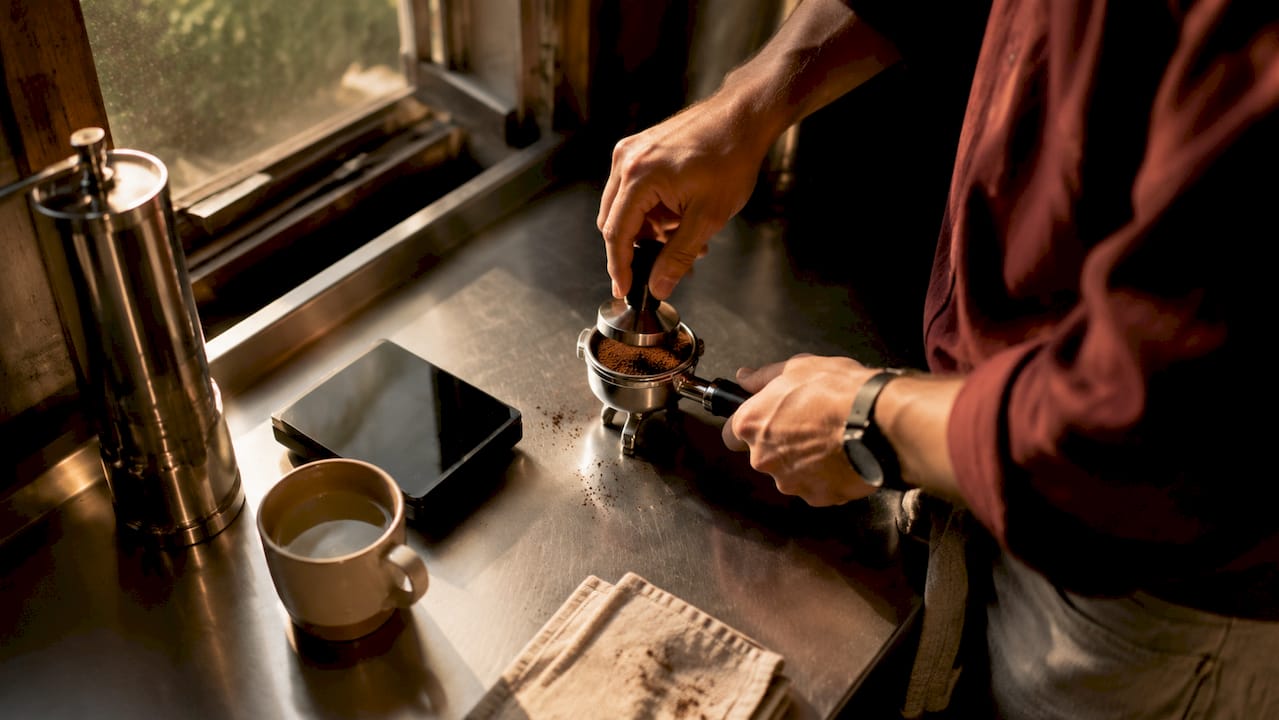
The regional differences within Europe are just as striking. Neapolitan espresso favors darker roasts, more intense extraction, and thicker crema. Milan and northern Italy lean toward lighter roasts with cleaner, more acidic profiles. Portugal pulls shots that are slightly longer and often paired with a small glass of sparkling water. These are not minor variations. They reflect centuries of local taste preferences baked into daily habit.
Espresso vs. americano: a key comparison
The espresso vs Americano debate reveals a lot about European coffee philosophy. An Americano is simply espresso diluted with hot water to approximate drip coffee volume. Europeans rarely order it. The espresso is the destination, not a base ingredient.
| Feature | European Espresso | American Espresso Drinks |
|---|---|---|
| Volume | 25–30 ml | 150–350 ml |
| Roast preference | Dark to medium | Medium to light |
| Consumption style | Standing, under 5 minutes | Seated, to-go cups common |
| Sugar use | Common, added at bar | Flavored syrups preferred |
| Crema expectation | Dense, persistent | Often absent or thin |
Pro Tip: If you order a “large espresso” at a traditional Italian bar, you will likely get a confused look. Ask for a “doppio” if you want a double shot, and drink it at the bar like a local.
European coffee styles also differ in roast philosophy. Southern European roasters, especially in Italy and Spain, historically favored dark roasts that produce low-acidity, bittersweet shots. The third-wave coffee movement has introduced lighter roasts to urban cafés across Berlin, Copenhagen, and Amsterdam, but the traditional dark roast still dominates neighborhood bars.
How is authentic european espresso brewed?
Authentic espresso preparation follows a tight set of parameters. Deviation from these parameters produces a shot that is either burnt and bitter or thin and sour. There is little margin for error, which is exactly why skilled baristas command respect in European café culture.
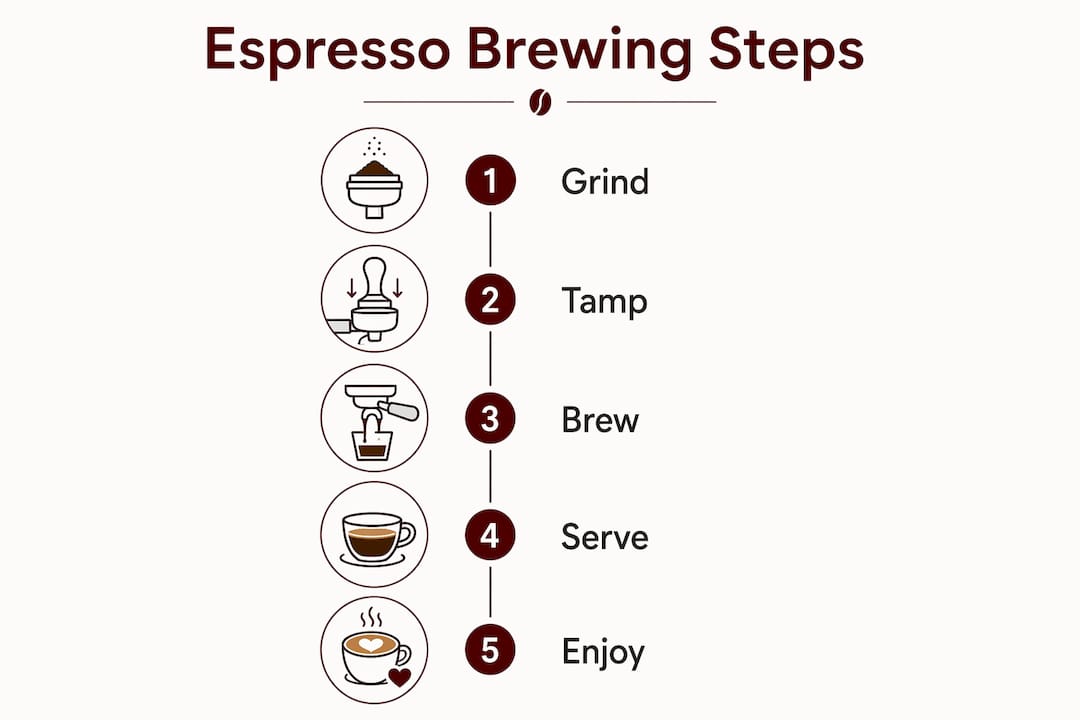
Standard Italian espresso calls for approximately 7 grams of finely ground coffee, extracted at 9 bars of pressure, at around 90°C, for 25–30 seconds. The result is a 25–30 ml shot with dense, uniform crema. Crema quality is the barista’s report card. Thin or pale crema signals under-extraction or stale beans. Dark, bitter crema signals over-extraction or excessive heat.
Here is the step-by-step process used in traditional European espresso bars:
- Grind fresh. Use a burr grinder set to a fine, consistent grind. Pre-ground coffee loses volatile compounds within minutes and produces flat shots.
- Dose correctly. Measure 7 grams for a single shot or 14 grams for a double. Consistency here is non-negotiable.
- Tamp with even pressure. Apply approximately 30 pounds of pressure with a flat tamper. An uneven tamp causes channeling, where water finds the path of least resistance and extracts unevenly.
- Set your machine. Confirm water temperature is at 88–92°C and pressure is at 9 bars. Most quality home machines like the Breville Barista Express or the De’Longhi La Specialista hold these parameters automatically.
- Pull the shot. Start the extraction and watch the flow. It should begin as a slow drip, then flow like warm honey. Total extraction time: 25–30 seconds.
- Evaluate the crema. Dense, hazel-colored crema that holds for 60–90 seconds indicates proper extraction. Serve immediately.
Pro Tip: Water quality matters more than most home brewers realize. Hard tap water leaves mineral deposits that alter flavor and damage machines. Use filtered water or a dedicated water softener for consistent results.
The precise espresso parameters are not arbitrary. They were developed over decades of trial in Italian bars and codified by organizations like the Istituto Nazionale Espresso Italiano. Deviating from them does not produce a “different” espresso. It produces a worse one. That is the European view, and it is hard to argue with the results.
Why do espresso bars matter so much in european life?
The Italian bar is not a coffee shop in the American sense. It is a neighborhood institution where locals gather multiple times a day, exchange news, and maintain social bonds over a 60-second espresso. Baristas at these bars are often multi-generational stewards of community life, not just beverage technicians.
The espresso ritual in Italy is built for speed and connection. The entire experience, from ordering to finishing, takes less than four minutes. Sipping in 3–4 quick sips is customary. Lingering over your espresso is not part of the tradition at the bar counter, though sitting at a table is always an option at a higher price.
That pricing structure is itself a cultural statement. Standing at the bar costs significantly less than sitting at a table, sometimes less than half the price. This two-tier system has been standard for decades. It rewards participation in the quick, communal ritual and gently discourages treating the bar as a remote office.
The café culture in Europe extends well beyond Italy. In Vienna, the coffeehouse tradition is a UNESCO-recognized cultural heritage. In Lisbon, the standing espresso bar mirrors the Italian model almost exactly. In Paris, the zinc-topped café counter serves a similar social function. Each culture has adapted the espresso ritual to its own pace and values, but the core idea holds: coffee is a social act, not just a caffeine delivery system.
“The Italian espresso bar is where the neighborhood checks in with itself. The coffee is the excuse. The connection is the point.”
The caffè sospeso tradition from Naples captures this spirit perfectly. A customer pays for two espressos but drinks only one, leaving the second for a stranger who cannot afford it. The practice originated in Naples and continues today. It is a small act, but it encodes the values of generosity and community that define Italian coffee culture at its best.
How is the european espresso market growing in 2026?
The European espresso market is large and still expanding. The EU market for unsweetened espresso beans represents an estimated retail volume of 120,000–150,000 tonnes as of Q2 2026, with an annual growth rate of 3–5%. The total market value sits at an estimated €2.5–3.2 billion. That growth is being driven partly by home brewing, as consumers seek to replicate café-quality shots without leaving the house.
Home espresso brewing interest is accelerating machine sales and premium bean consumption across Europe in 2026. Consumers are investing in quality equipment and sourcing single-origin beans to match the flavor profiles they experience at their favorite bars. The best espresso machines for home use, including the Breville Barista Pro, De’Longhi Dedica, and Jura E8, have all seen increased demand as a result.
Price variation across European cities tells a parallel story about local coffee culture and cost of living.
| City | Espresso Price (EUR) | Cappuccino Price (EUR) |
|---|---|---|
| Lisbon | 1.00–1.50 | 1.80–2.20 |
| Zagreb | 1.20–1.80 | 2.00–2.80 |
| Rome | 1.00–1.30 | 1.50–2.00 |
| Paris | 2.00–3.00 | 3.50–5.00 |
| Zurich | 3.50–4.50 | 5.00–7.00 |
Coffee prices across Europe reflect both economic conditions and cultural attitudes toward coffee. In Italy and Portugal, low espresso prices are a point of civic pride. In Switzerland, high prices reflect both cost of living and a premium service culture. The gap between Lisbon and Zurich is not just economic. It reflects how deeply each country has embedded espresso into everyday life versus treating it as a premium experience.
For home brewers looking to match European quality, bean selection is as important as equipment. Dark roasts from Italian-style blends, often featuring Robusta for body and crema, deliver the traditional flavor profile. Lighter, single-origin roasts from Ethiopian or Colombian sources suit the northern European third-wave style. Exploring artisan brew guides can help you identify which profile fits your palate before committing to a bag.
Key takeaways
European espresso is defined by precise extraction parameters, regional roast traditions, and a social ritual that makes the drink inseparable from community life.
| Point | Details |
|---|---|
| Precise parameters matter | Authentic espresso requires 9 bars pressure, 88–92°C water, and 25–30 seconds extraction. |
| Regional styles vary widely | Neapolitan espresso uses dark roasts; northern Italian and Nordic styles favor lighter, cleaner profiles. |
| The bar is a social institution | Italian espresso bars are community hubs where standing, speed, and connection define the ritual. |
| Market growth is real | The EU espresso bean market is valued at €2.5–3.2 billion and growing at 3–5% annually. |
| Home brewing is rising | Consumers across Europe are investing in quality machines and beans to replicate café-quality shots at home. |
What espresso taught me about slowing down to speed up
I spent a week in Naples a few years back, and I made the mistake most Americans make. I ordered my espresso, took it to a corner table, and sat down to check my phone. The barista looked at me the way a craftsman looks at someone misusing a good tool. Not rude. Just disappointed.
The thing about Italian coffee culture that most articles miss is this: the speed is not about efficiency. It is about presence. You stand at the bar, you drink your shot in three sips, you exchange a few words with the person next to you, and you leave. The whole ritual forces you to be exactly where you are for 90 seconds. No multitasking. No screens. Just the shot, the crema, and the moment.
Replicating that at home is harder than buying the right machine. The Breville or De’Longhi will get your extraction right. Getting yourself to stand at your kitchen counter, drink your espresso without distraction, and actually taste it, that takes practice. Most home brewers obsess over grind size and ignore the ritual entirely. The ritual is half the product.
My honest recommendation: before you spend $500 on a machine, spend $15 on a bag of quality Italian-style dark roast and pull shots on a Moka pot for two weeks. Learn what the flavor is supposed to be. Then upgrade your equipment. You will know exactly what you are chasing, and you will get there faster.
— Jett
Brew european espresso at home with Espritkaffe
Espritkaffe sources and roasts coffee for people who take their cup seriously. If this article convinced you that the bean and the method both matter, the next step is straightforward. Espritkaffe’s dark roast collection is built for traditional espresso preparation, delivering the body, crema, and low-acidity profile that defines the southern European style. For those drawn to the cleaner, brighter profiles of northern European café culture, the light roast selection offers single-origin options worth exploring. If convenience matters on busy mornings, the single serve capsules deliver consistent espresso-style flavor without the setup. Your roast. Your ritual. Start there.
FAQ
What is european espresso, exactly?
European espresso is a 25–30 ml concentrated coffee shot brewed under 9 bars of pressure at approximately 90°C, producing a dense crema layer. The term originates from Italian café culture and is the standard coffee drink across most of Europe.
How does european espresso differ from american espresso?
European espresso is consumed in small volumes, standing at a bar, within minutes of ordering. American espresso culture favors larger milk-based drinks, flavored syrups, and to-go cups, which reflects a fundamentally different relationship with the beverage.
What pressure and temperature are needed for authentic espresso?
Authentic Italian espresso requires 9 bars of pressure and water at 88–92°C, extracted for 25–30 seconds. Deviating from these parameters produces shots that are either under-extracted and sour or over-extracted and bitter.
What is the caffè sospeso tradition?
The caffè sospeso tradition originated in Naples, where a customer pays for two espressos but drinks only one, leaving the second for someone who cannot afford it. The practice continues today as a symbol of community generosity.
Why is espresso cheaper standing at the bar in italy?
Italian bars use a two-tier pricing system where standing at the counter costs significantly less than sitting at a table. This structure reflects decades of social etiquette that rewards quick, communal coffee consumption over extended stays.