

Mandheling coffee is a full-bodied Arabica from the North Sumatra highlands of Indonesia, defined by its wet-hulled processing, low acidity, and a syrupy, earthy cup that stands apart from virtually every other origin in the world. Grown at 1,100 to 1,500 meters in the Tapanuli region, this coffee carries dark chocolate, cedar, and tobacco notes that develop through a process called Giling Basah, where the hull is removed while the bean still holds 30 to 35% moisture. If you drink Ethiopian or Kenyan coffees for their bright, fruit-forward acidity, Mandheling is the opposite end of the spectrum. It rewards patience, proper brewing, and an appreciation for depth over brightness.
What is Mandheling coffee and where does it come from?
Mandheling coffee is Arabica, with its origin traced to North Sumatra’s Mandailing ethnic region, though production spans the broader Tapanuli highlands. The name is a regional designation, not a single varietal or estate. Think of it the way you think of Champagne as a region rather than a grape. Grade 1 lots score 82 to 88 SCA points and are grown at elevations between 1,100 and 1,500 meters, where cooler temperatures slow cherry development and concentrate sugars.
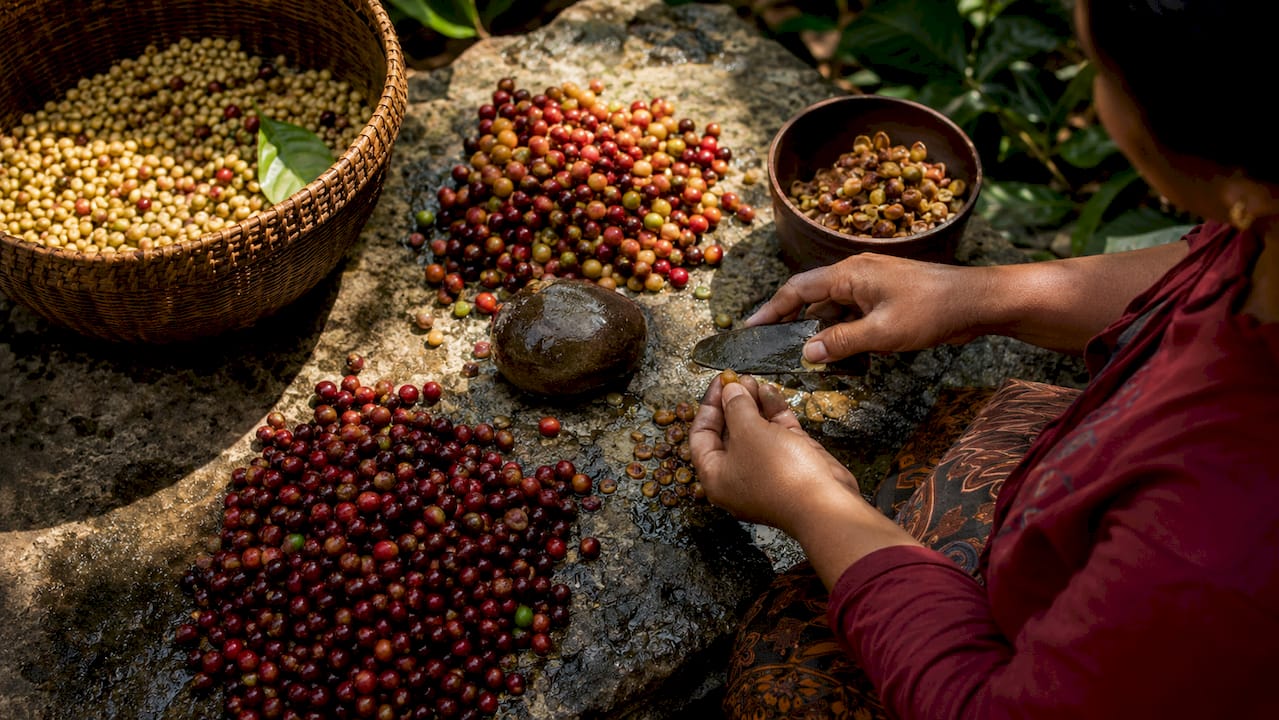
The processing method is what truly separates Mandheling from other Arabicas. Wet-hulling, or Giling Basah, removes the parchment layer while the bean still holds 30 to 35% moisture. The exposed green bean then air dries to the export-ready 10 to 12% moisture level. This is the opposite of washed processing, where parchment stays on until the bean is nearly dry. The result is a softer, blue-green bean with a dramatically different flavor outcome.
| Processing method | Hull removal timing | Acidity | Body | Flavor outcome |
|---|---|---|---|---|
| Wet-hulled (Giling Basah) | At 30–35% moisture | Low | Heavy, syrupy | Earthy, chocolate, cedar, tobacco |
| Washed | At 10–12% moisture | High to medium | Light to medium | Floral, citrus, clean |
| Natural (dry process) | After full drying | Medium | Full | Fruity, wine-like, sweet |
The Tapanuli highlands receive consistent rainfall and volcanic soil enrichment, which adds mineral complexity to the cup. Indonesian Sulawesi coffee follows a similar wet-hulled approach, but Mandheling’s specific terroir produces a heavier body and more pronounced earthiness that connoisseurs recognize immediately.
Mandheling coffee flavor profile: what to expect in the cup
Mandheling’s flavor is built around dark chocolate, cedar, and a syrupy body that coats the palate from the first sip. The full flavor profile includes tobacco leaf, forest floor, and subtle herbal complexity layered beneath the chocolate base. Acidity is low enough that many people who find Ethiopian or Kenyan coffees too sharp find Mandheling genuinely comfortable to drink, even on an empty stomach.
The body is the defining characteristic. Where a washed Yirgacheffe feels like tea, Mandheling feels like melted dark chocolate. This is a direct result of the wet-hulled process, which builds mouthfeel that washed coffees simply cannot replicate. Roasters who blend for espresso programs often include 10 to 20% Mandheling specifically to add that weight and depth to the shot.
Key tasting notes you should expect:
- Dark chocolate and cocoa: The dominant note, present from aroma through finish
- Cedar and wood: A dry, resinous quality that adds structure
- Tobacco leaf: Subtle, not harsh, adding savory complexity
- Forest floor and earth: The signature Sumatran earthiness that divides casual drinkers from enthusiasts
- Herbal undertones: Faint green herb notes, especially in lighter roasts of Grade 1 lots
- Syrupy sweetness: Not fruity sweetness, but a deep, molasses-like quality in the finish
Pro Tip: Store your Mandheling beans in an airtight, opaque container away from heat and light. Wet-hulled beans are more porous than washed beans and absorb ambient odors faster. Beans stored improperly develop a musty, woody off-note that masks the chocolate and cedar you paid for.
How to brew Mandheling coffee for maximum flavor
Mandheling’s low acidity and bold profile make it one of the most forgiving coffees to brew, but under-extraction is the one mistake that ruins it. Under-extraction mutes sweetness and amplifies the earthiness into something sharp and unpleasant, despite the coffee’s naturally low acid. The goal with every method below is full, even extraction that pulls the chocolate and cedar forward.
French press
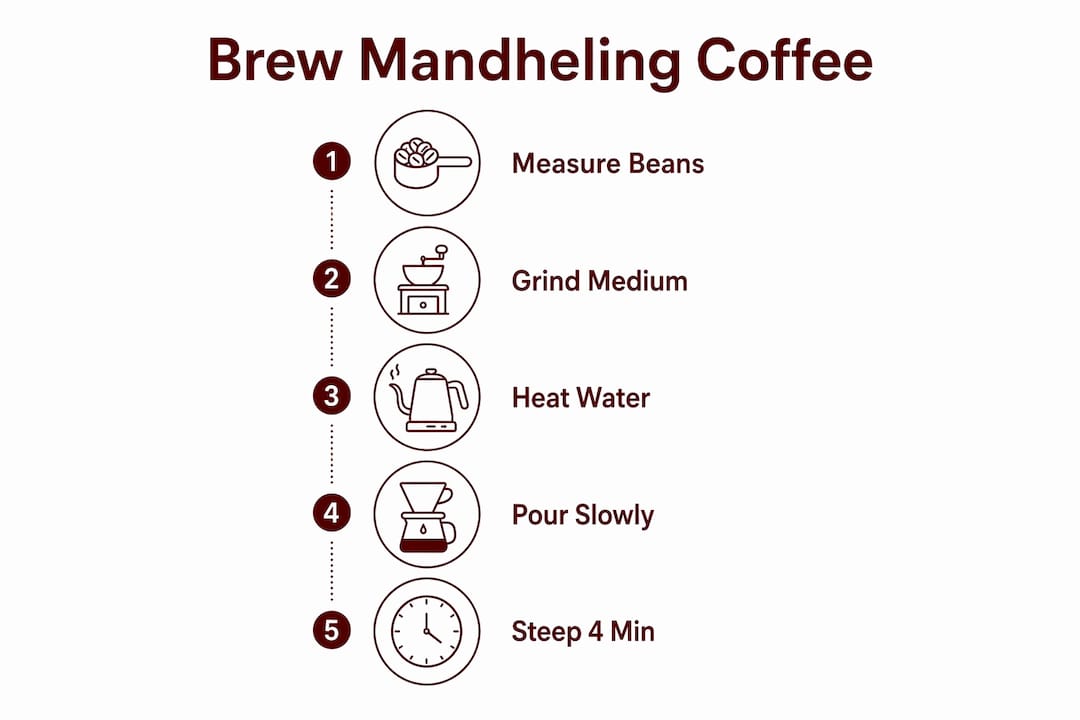
French press is the most natural match for Mandheling because it preserves the oils that carry body and mouthfeel. Use a 1:15 coffee-to-water ratio, coarse grind, and water at 93 to 95°C. Steep for four minutes, press slowly, and pour immediately. The result is a cup with maximum body and a long, chocolatey finish. For a deeper dive into ratios and timing, the French press brewing guide at Espritkaffe covers the full technique.
Pour-over
Pour-over highlights Mandheling’s herbal and cedar complexity more than French press does. Use water at 87 to 88°C with a 1:15 ratio, medium-coarse grind, and a staged pouring technique. A KONO dripper works particularly well for this origin.
- Bloom pour: add twice the coffee weight in water, wait 30 seconds
- First pour: bring total water to 40% of target weight, pour in slow circles
- Second pour: bring to 70% of target weight, maintain a steady spiral
- Final pour: complete to 100%, keeping the bed level throughout
- Total draw-down time: 3 to 3.5 minutes
Pro Tip: The staged pour-over technique slows extraction through the dense, wet-hulled grounds and draws out caramel sweetness that a single continuous pour misses entirely. If your pour-over tastes flat or overly earthy, the staged method is the fix.
Espresso
Mandheling pulls a dense, low-acid espresso shot with a thick crema and chocolate-forward flavor. Use a 1:2 ratio (18g in, 36g out), medium-fine grind, and a 27 to 30 second extraction at 93°C. It works exceptionally well as a base for milk drinks because the earthiness cuts through dairy without turning bitter.
Cold brew
Cold brew amplifies Mandheling’s chocolate depth and completely eliminates any residual sharpness. Use a 1:8 ratio, coarse grind, and steep at room temperature for 12 to 16 hours or in the refrigerator for 18 to 24 hours. The resulting concentrate is thick, sweet, and intensely chocolatey. Dilute 1:1 with water or milk before serving.
How to buy Mandheling coffee: grades, freshness, and trusted brands
Mandheling is a regional name, not a single farm or varietal, so quality varies significantly between lots. Grade 1 is the benchmark: lots scoring 82 to 88 SCA points with low defect counts and clean, well-executed wet-hulled processing. Grade 2 and below show more defects, inconsistent moisture management, and a higher risk of the musty off-notes that give Sumatran coffee a bad reputation among uninformed buyers.
Freshness and proper storage are non-negotiable for wet-hulled beans. Because the hull is removed early in processing, the green bean is exposed to the environment longer than washed coffees. Mishandled beans develop mustiness before they even reach the roaster. When buying roasted Mandheling, look for a roast date within the last four weeks and packaging with a one-way degassing valve.
What to check before you buy:
- Roast date: Four weeks or less from roast date for peak flavor
- SCA score or grade: Grade 1 or specialty designation (82+ SCA points)
- Processing disclosure: Confirm wet-hulled or Giling Basah on the label
- Defect count: Reputable roasters publishing low defect counts signal quality sourcing
- Origin specificity: Tapanuli, Mandailing, or Lintong sub-regions indicate traceable sourcing
- Packaging: One-way valve bags protect against oxidation and CO2 buildup
When comparing roasted beans to green beans, roasted offers convenience and immediate flavor access, while green beans purchased from specialty importers like Genuine Origin or Sweet Maria’s give home roasters control over roast level and freshness. For most enthusiasts, buying freshly roasted from a specialty roaster with transparent sourcing is the practical choice.
Key takeaways
Mandheling coffee’s defining quality is the combination of heavy body, low acidity, and earthy chocolate complexity produced by wet-hulled processing at high elevation in North Sumatra.
| Point | Details |
|---|---|
| Origin and grade | Grade 1 Mandheling scores 82 to 88 SCA points, grown at 1,100 to 1,500m in Tapanuli, North Sumatra. |
| Processing defines flavor | Wet-hulling at 30 to 35% moisture creates the syrupy body and earthy, low-acid profile no other method replicates. |
| Brew for full extraction | Under-extraction mutes sweetness and exaggerates earthiness; French press, staged pour-over, and cold brew all work well. |
| Buy fresh, store right | Wet-hulled beans degrade faster than washed; buy within four weeks of roast date and store in airtight, opaque containers. |
| Quality signals matter | Look for Grade 1 designation, processing disclosure, and traceable sub-region sourcing before purchasing. |
Why Mandheling earns a permanent spot in my rotation
I’ve brewed a lot of single-origin coffees over the years, and Mandheling is the one I return to when I want something that actually tastes like coffee rather than a fruit juice or a floral tea. That’s not a criticism of bright origins. It’s an acknowledgment that Mandheling occupies a category of its own.
The challenge most home brewers face with this coffee is the earthiness. If you pull a weak extraction, the earthiness dominates and the chocolate disappears. I’ve watched people write off Mandheling entirely because they brewed it like a light-roast Ethiopian and got a muddy, flat cup. The staged pour-over technique changed that for me. It’s the single biggest improvement you can make if you’re not getting the sweetness the tasting notes promise.
What I find genuinely underappreciated is how well Mandheling works in milk-based drinks. The low acidity means it doesn’t curdle or turn sour in a latte, and the chocolate and cedar notes punch through oat milk in a way that most single-origins can’t. If you’re a dark roast drinker who has never tried a quality Grade 1 Mandheling in a flat white, that’s the experiment worth running this week.
Sourcing is where most people cut corners and then blame the coffee. A musty Mandheling is a storage or processing failure, not a flavor characteristic. Buy from roasters who publish roast dates and sourcing details. The difference between a well-handled Grade 1 lot and a poorly stored Grade 2 is not subtle. It’s the difference between a cup you’ll remember and one you’ll throw out.
— Jett
Explore bold, full-bodied roasts at Espritkaffe
If Mandheling’s depth and low acidity match what you’re looking for in a daily cup, Espritkaffe’s dark roast collection is the natural next step. Every roast is built for clarity and intention, not mass-market compromise.
For something with Mandheling-level body and an added functional dimension, the Coffee with Mushrooms Dark Roast delivers the same earthy, full-bodied profile with lion’s mane and chaga for sustained focus. If you want a multi-origin blend that captures the same low-acid depth, the 6 Bean Blend layers complexity from six distinct origins into one cup. Espritkaffe roasts to order, so every bag ships at peak freshness with a roast date you can trust.
FAQ
What does Mandheling coffee taste like?
Mandheling coffee tastes like dark chocolate, cedar, and tobacco with a syrupy, heavy body and very low acidity. The earthy, forest-floor complexity is a direct result of wet-hulled processing in North Sumatra.
Is Mandheling coffee low in acidity?
Yes. Mandheling is one of the lowest-acidity Arabica coffees available, making it a strong choice for people who find high-acid origins like Ethiopian or Kenyan coffees hard on the stomach.
What is the best brewing method for Mandheling coffee?
French press and cold brew maximize Mandheling’s body and chocolate depth. Pour-over with a staged pouring technique highlights the cedar and herbal complexity. All three methods require full extraction to avoid flat, overly earthy results.
Is Mandheling coffee available as decaf?
Mandheling coffee is not inherently decaffeinated. Some specialty roasters offer Swiss Water Process decaf versions of Sumatran or Mandheling-style beans, which preserve the body and low acidity while removing caffeine.
Where can you buy quality Mandheling coffee?
Quality Mandheling coffee is available from specialty roasters who publish roast dates, SCA scores, and sub-region sourcing details. Look for Grade 1 designation and wet-hulled or Giling Basah processing disclosure on the label before purchasing.