

Pairing coffee with your remote work schedule means timing caffeine intake to match your natural energy rhythms, deep work blocks, and planned breaks. Done right, this turns coffee from a mindless habit into a precision productivity tool. The difference between sipping coffee all day and drinking it strategically is the difference between afternoon crashes and sustained focus. Concepts like the cortisol awakening response, caffeine half-life, and virtual coffee breaks give remote workers a real framework for getting more from every cup.
How to pair coffee with your remote work schedule
The core principle is simple: caffeine timing affects focus more than caffeine quantity. Your body produces cortisol naturally in the first 60–90 minutes after waking. Drinking coffee during that window blunts the effect and builds tolerance faster. The smarter move is to wait.
Delaying caffeine 90 minutes post-wake preserves your natural alertness and reduces dependence. This is especially important for remote workers who lack the physical office cues that once structured their mornings. Without a commute or a colleague handing you a cup, your coffee habits drift easily.
Once you pass that 90-minute window, time your first cup about 30 minutes before a deep work block. Caffeine peaks in your bloodstream roughly 30 minutes after intake, which means it hits full strength right as you need it most. Deep work blocks run best at around 90 minutes, so one well-timed cup can carry you through an entire focused session.
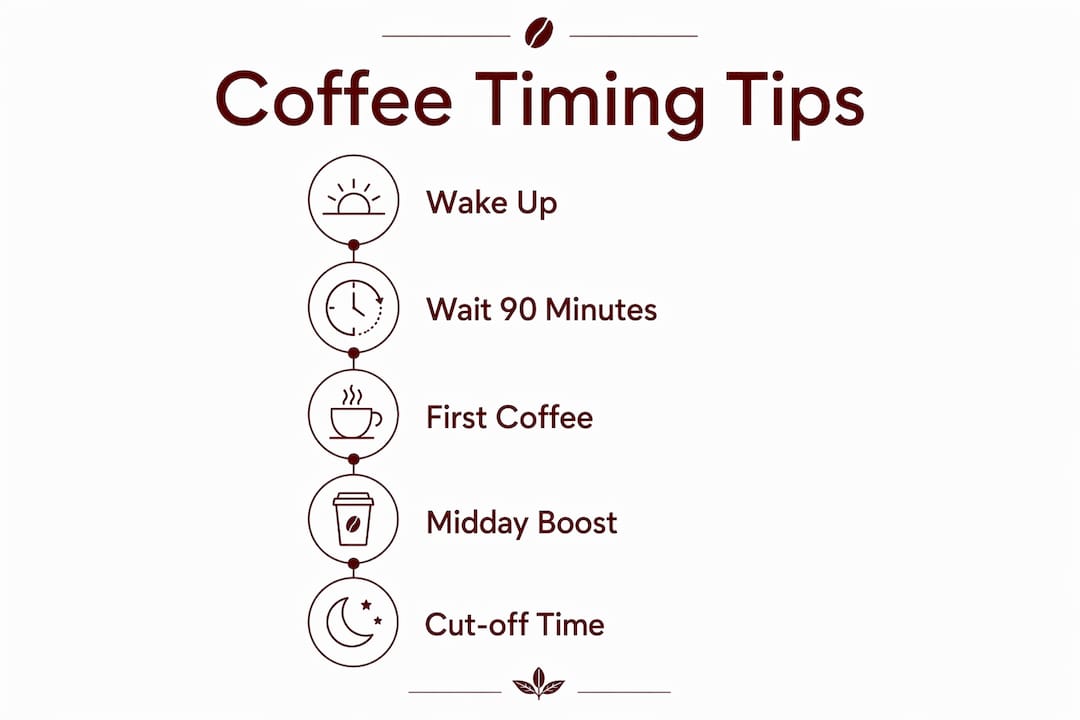
Here is a practical timing sequence for a standard remote workday:
- Wake up and hold off on coffee for 90 minutes. Drink water, move, or eat breakfast instead.
- First coffee at roughly 90 minutes post-wake, about 30 minutes before your first deep work block.
- Second coffee (if needed) timed 30 minutes before your afternoon focus session, no later than early afternoon.
- Cut-off point set at 8–10 hours before your target bedtime to protect sleep quality.
Pro Tip: Keep a simple log for one week. Note your coffee times, focus quality, and sleep rating each day. Patterns emerge fast, and you will find your personal sweet spot within days.
How can coffee breaks improve remote work connection?
Virtual coffee breaks are defined as scheduled, informal video calls of 15–30 minutes where remote teammates connect without a work agenda. They replicate the spontaneous hallway conversations that office workers take for granted. For remote workers, 23% report loneliness as their top challenge, making these breaks more than a nice-to-have.

The structure matters. A virtual coffee break that gets added to a calendar once and then forgotten does nothing. Recurring scheduled breaks function as social anchors that reduce isolation and break down departmental silos over time. Weekly or biweekly appointments work better than ad hoc invitations.
The 52/17 productivity ratio also supports this approach. Research points to 52 minutes of focused work followed by a 17-minute break as the pattern used by the most productive workers. A 15-minute virtual coffee break fits cleanly inside that rest window without eating into your next focus block.
Key practices for effective coffee breaks during remote work:
- Schedule them as recurring appointments, not one-off events. Consistency is what makes them stick.
- Keep them agenda-free. The moment a coffee break becomes a status update, it stops being a break.
- Rotate participants across teams to prevent the same two people always pairing up.
- Use video, not just audio. Seeing faces builds rapport faster than voice alone.
Pro Tip: Tools like LEAD.bot integrate with Slack to automatically pair teammates for virtual coffee sessions on a set schedule. This removes the friction of organizing breaks manually.
What are the best coffee types for remote work focus?
The best coffee for remote work depends on what you need from each session. Dark roasts, light roasts, instant coffee, and functional blends each serve a different purpose in a remote work coffee routine.
Reheating coffee repeatedly at home degrades both taste and caffeine bioavailability. This is one of the most overlooked problems in a home office setup. A quality thermal mug or insulated carafe solves it without any extra effort. Pairing your brewing method with the right vessel keeps your cup consistent from the first sip to the last.
| Coffee Type | Best For | Key Advantage | Watch Out For |
|---|---|---|---|
| Dark Roast | Morning deep work | Bold flavor, lower acidity | Higher perceived strength, not higher caffeine |
| Light Roast | Early-day energy | Brighter notes, slightly more caffeine | Can taste thin if brewed weak |
| French Press | Work sprints | Full-body flavor, no paper filter | Requires 4-minute brew time |
| Single-Serve Capsules | Quick sessions | Consistent dose, zero prep | Higher cost per cup |
| Instant Coffee | Meetings, travel days | Fastest prep, portable | Variable quality by brand |
| Functional Blends | Afternoon focus | Added cognitive support | Check ingredient quality |
Functional coffee blends, particularly mushroom coffee varieties combining lion’s mane or chaga with medium roast, have gained traction among remote workers who want cognitive support without a second full caffeine dose. The caffeine and dopamine connection explains part of why these blends feel different. Lion’s mane supports nerve growth factor, which complements caffeine’s stimulant effect rather than duplicating it.
Pairing coffee with a protein-rich snack, such as peanut butter on whole grain toast, slows caffeine absorption slightly and extends the focus window. This is a simple adjustment that most remote workers never try.
How do you personalize your remote work coffee routine?
Caffeine metabolism varies significantly between individuals based on genetics, body weight, and liver enzyme activity. Two people drinking the same cup at the same time can have completely different experiences. One person feels sharp for four hours. The other crashes in two. Treating caffeine as a precision tool means accepting that your schedule will not look exactly like anyone else’s.
The practical starting point is tracking. A coffee journal does not need to be elaborate. A note in your phone with three data points works: time of intake, focus quality one hour later, and sleep rating that night. After two weeks, you will see your personal caffeine window clearly.
Caffeine has a half-life of 5–6 hours, meaning half of what you drink at 2 p.m. is still active at 7 or 8 p.m. For most remote workers targeting a 10 p.m. bedtime, the cut-off lands around 2 p.m. Post-midday, decaf espresso, herbal teas like rooibos or chamomile, or functional mushroom blends give you the ritual without the sleep cost.
Anchoring coffee rituals to work transitions is the most underrated habit in a remote work coffee routine. Without office cues like a morning commute or a team standup, coffee consumption drifts into mindless refilling. Tying your first cup to the act of opening your task manager, or your second cup to the start of your afternoon block, creates structure that the home environment does not provide naturally.
Here is a four-step framework for personalizing your routine:
- Set a wake-to-coffee delay. Start at 90 minutes and adjust based on how you feel during the first work block.
- Identify your two peak focus windows. Most remote workers find one in the late morning and one in the early afternoon.
- Establish a hard cut-off time. Use your target bedtime minus 8 hours as your starting rule.
- Replace, do not eliminate. Swap late-day coffee with decaf or herbal tea to keep the ritual without the disruption.
Pro Tip: Apps like Bearable or a simple spreadsheet work well for tracking caffeine and sleep together. Two weeks of data is enough to spot your personal pattern.
Key takeaways
Timing caffeine to your cortisol rhythm, deep work blocks, and a firm cut-off time is the most effective way to pair coffee with a remote work schedule for sustained focus and better sleep.
| Point | Details |
|---|---|
| Delay your first cup | Wait 90 minutes after waking to let cortisol normalize before adding caffeine. |
| Time coffee before focus blocks | Drink 30 minutes before a 90-minute deep work session for peak caffeine alignment. |
| Set a firm cut-off | Stop caffeine 8–10 hours before sleep to protect sleep quality and recovery. |
| Use breaks intentionally | Schedule 15–30 minute virtual coffee breaks as recurring appointments to reduce isolation. |
| Track and personalize | Log intake, focus, and sleep for two weeks to find your individual caffeine window. |
What i have learned from years of coffee and remote work
The biggest mistake I made in my first year of remote work was treating coffee like a tap I could turn on whenever focus started to slip. I drank more and got less done. The afternoon fog was real, and I kept trying to caffeinate my way through it instead of recognizing that I had already exceeded my useful window hours earlier.
The 90-minute morning delay felt counterintuitive at first. I was convinced I needed coffee to start. What I found instead was that my first hour without it was sharper than I expected, and the first cup hit harder and lasted longer when I finally had it. That single change restructured my entire day.
Virtual coffee breaks changed something I did not expect. I thought they were a productivity compromise, a social nicety that would cost me time. They turned out to be the most reliable reset in my schedule. A 15-minute call with no agenda cleared mental clutter faster than any productivity app I have tried.
The tracking piece is where most people give up too early. Two days of data tells you nothing. Two weeks tells you everything. Your cut-off time, your optimal first-cup window, your afternoon alternative, all of it becomes obvious when you actually look at the numbers. The remote work coffee routine that works is the one built around your data, not someone else’s schedule.
— Jett
Find the right coffee for your remote work day
Building a coffee routine that actually supports your focus starts with having the right options on hand.
Espritkaffe carries the full range of what a remote work coffee routine needs. Bold dark roasts for morning deep work sessions. Bright light roasts for early-day clarity without jitters. Single-serve capsules for consistent, zero-effort doses between meetings. And mushroom coffee blends for afternoon focus without the late-day caffeine cost. Every product is roasted for people who treat their time and attention as the assets they are. Browse the full collection at Espritkaffe and match your coffee to your schedule.
FAQ
When should remote workers have their first coffee?
The optimal time is 90 minutes after waking. This allows natural cortisol levels to peak and decline before caffeine enters the picture, which reduces tolerance buildup and maximizes alertness.
What is the best coffee for remote work focus?
Dark roasts and functional mushroom blends are the strongest options for sustained focus. Dark roasts deliver bold flavor for morning sessions, while mushroom coffee supports afternoon cognitive function without disrupting sleep.
How long should a virtual coffee break last?
Virtual coffee breaks work best at 15–30 minutes. That duration fits within the 17-minute rest window of the 52/17 productivity ratio and provides enough time for genuine social connection without cutting into the next focus block.
What time should remote workers stop drinking coffee?
The cut-off is 8–10 hours before your target bedtime. With a half-life of 5–6 hours, caffeine consumed after 2 p.m. remains active well into the evening for most people and directly competes with sleep quality.
How do you stop mindless coffee drinking while working from home?
Anchor each cup to a specific work transition, such as opening your task manager or starting a new focus block. This replaces the environmental cues that an office provides and prevents the drift into all-day refilling that undermines both caffeine effectiveness and sleep.