

Sumatra decaf is a full-bodied, chemical-free decaffeinated coffee from Sumatra, Indonesia, known for its bold earthy flavor, herbal undertones, and rustic spice notes. Unlike most decafs that taste flat or washed out, this coffee retains its rich herbal flavors and full body after decaffeination. The secret is a gentle water-based process that removes caffeine without stripping the origin character that makes Sumatran beans so distinctive. Whether you prefer a medium roast for filter brewing or a dark roast for espresso, decaf Sumatra coffee delivers a cup that punches well above what most people expect from a low-caffeine option.
What makes Sumatra decaf unique compared to other decaf coffees?
Sumatra decaf stands apart because of two compounding factors: how the beans are processed at origin and how caffeine is removed afterward. Most decafs lose their identity at one of these two stages. Sumatran beans survive both with their character intact.
The Giling Basah wet-hull process
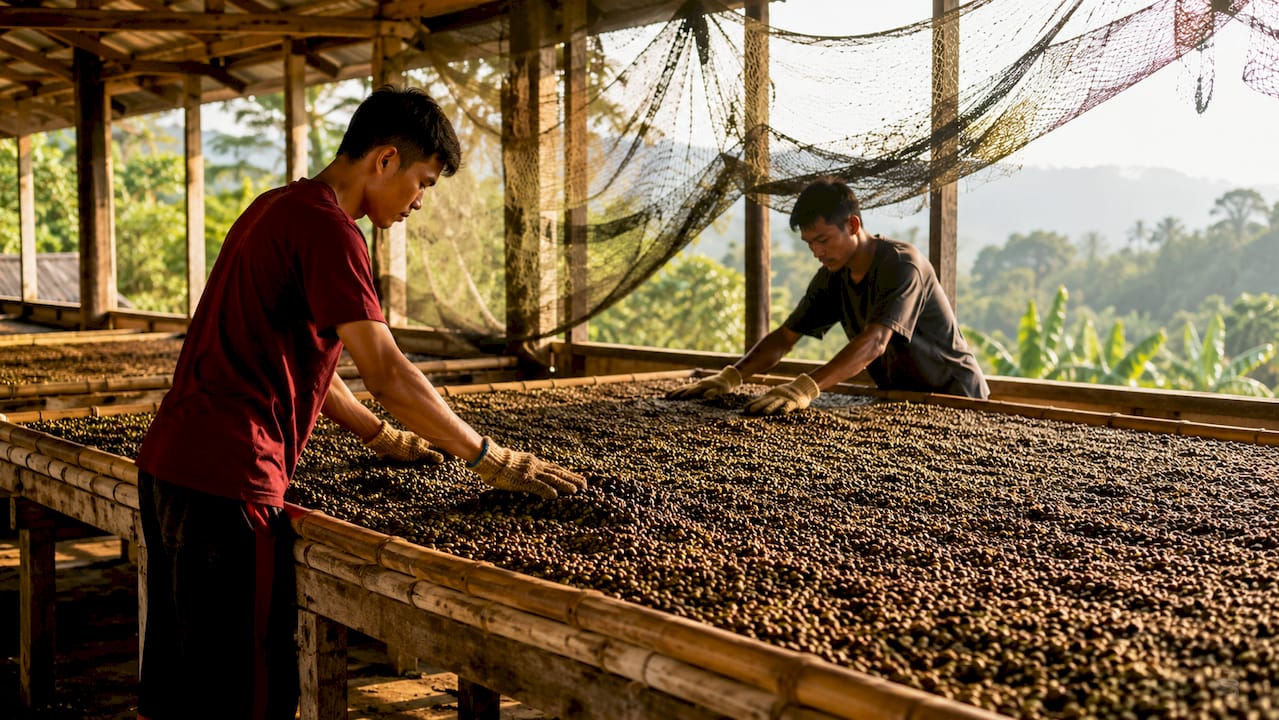
Sumatra coffee is processed using Giling Basah wet-hulling, a method specific to the region where the hull is removed while the bean still holds significant moisture. This gives Sumatran coffee its signature heavy body and rustic spice notes that you simply do not find in washed or natural processed coffees from other origins. The result is a dense, low-acidity bean with an earthy, almost savory depth before roasting even begins.
Water-based decaffeination vs. chemical methods
The water decaf process uses carbonated water in a pressurized chamber to extract caffeine without chemical solvents. This matters because solvent-based methods, which use ethyl acetate or methylene chloride, degrade delicate flavor compounds along with the caffeine. Water processing preserves the raisin, caramel, and earthy notes that define Sumatra’s profile. The difference in the cup is real and noticeable.
| Feature | Sumatra decaf | Generic decaf |
|---|---|---|
| Decaf method | Water-based, chemical-free | Often solvent-based |
| Body | Medium to heavy | Light to medium |
| Flavor complexity | Earthy, herbal, caramel, raisin | Flat, muted |
| Origin character | Strongly preserved | Frequently lost |
| Acidity | Medium and balanced | Variable |
Pro Tip: When buying decaf Sumatra coffee, look for “water process” or “Swiss Water Process” on the label. If the packaging does not specify the decaf method, assume a chemical process was used.
How do roasting levels affect Sumatra decaf flavor and body?
Roast level is the single biggest variable you control when choosing a Sumatra decaf. The bean’s natural character sets the floor, but the roast determines what ends up in your cup.
Medium roast: complexity and clarity
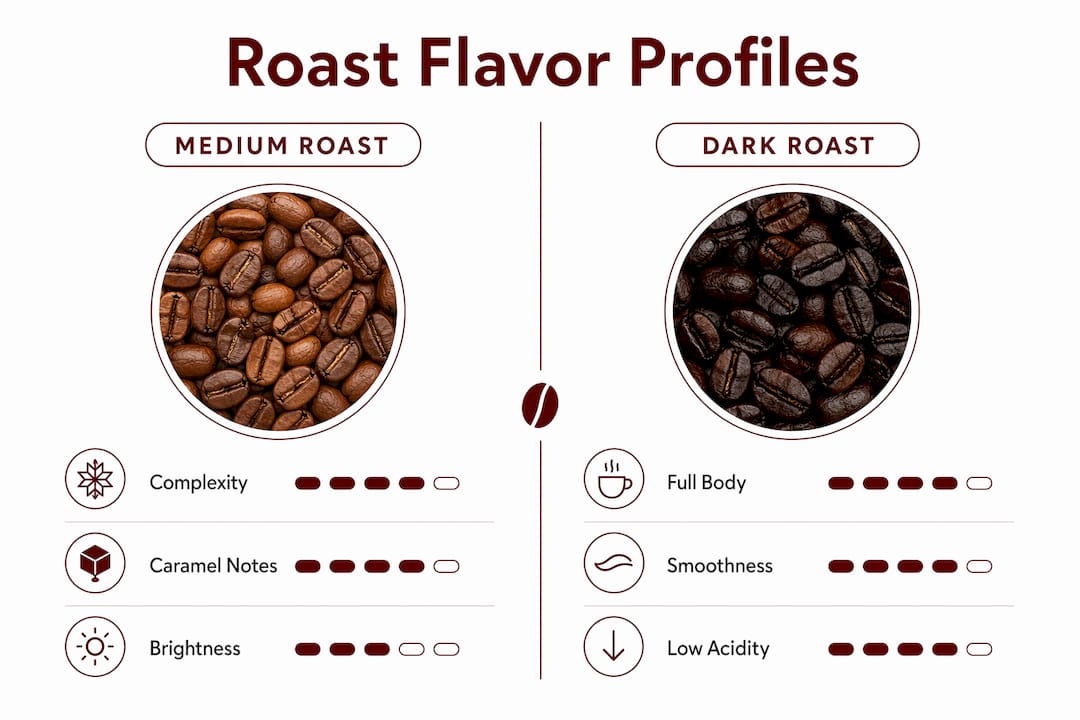
Medium roasts highlight the raisin and caramel notes in Sumatra decaf while keeping enough brightness to show the bean’s herbal complexity. The body is substantial but not overwhelming, and the finish is clean. Medium roast is the better choice when you want to taste what makes Sumatran coffee distinct from any other origin. Filter methods like French Press and Chemex are the natural match here.
Dark roast: body and smoothness
Dark roasts deepen body and smoothness while reducing acidity, which makes them ideal for espresso and milk-based drinks. The earthy, rustic notes shift toward dark chocolate and roasted grain. You lose some of the raisin brightness, but you gain a cup that holds its own under steamed milk without turning bitter. For anyone who drinks lattes or cappuccinos without caffeine, a dark roast Sumatra decaf is the most satisfying option available.
Key differences between roast levels in Sumatra decaf:
- Medium roast: Raisin, caramel, and herbal notes; clean finish; best for filter brewing
- Dark roast: Dark chocolate, roasted grain, and heavy body; low acidity; best for espresso
- Body: Increases from medium to dark roast
- Acidity: Decreases as roast level rises
- Brewing match: Medium roast suits pour-over and French Press; dark roast suits espresso machines
Pro Tip: If you brew with a French Press or Chemex, choose a medium roast Sumatra decaf. If you pull shots or make milk drinks, go dark. Picking the wrong roast for your brew method is the most common mistake decaf drinkers make.
What brewing methods best showcase Sumatra decaf’s flavor profile?
The best brewing methods for Sumatra decaf are French Press, Chemex, Aeropress, and espresso. Each one extracts the coffee’s earthy, smooth character differently, and matching the method to the roast level makes a significant difference in the final cup.
-
French Press. Use a coarse grind and water at 200°F (just off the boil). Steep for four minutes before pressing. The full-immersion method pulls out the heavy body and earthy notes that define medium roast Sumatra decaf. This is the most forgiving method for beginners and the one that showcases the bean’s mouthfeel most clearly.
-
Chemex. Use a medium-coarse grind and a four-minute pour-over. The Chemex’s thick paper filter removes oils, which brightens the cup and lets the raisin and caramel notes come forward. The result is cleaner than French Press but still full-flavored. This method rewards patience and precise pouring.
-
Aeropress. Use a medium-fine grind and steep for two minutes before pressing. The Aeropress produces a concentrated, espresso-adjacent cup with a smooth, low-acid finish. It works well with both medium and dark roast Sumatra decaf and is the best travel option for enthusiasts who refuse to compromise on quality. For more on Aeropress-style decaf brewing, the technique translates directly to other full-bodied decafs.
-
Espresso. Use a fine grind and pull a 25–30 second shot. Dark roast Sumatra decaf produces a thick, syrupy shot with low bitterness and a long finish. It holds up well under steamed milk, making it the right base for lattes and flat whites without caffeine.
-
Cold brew. Use a coarse grind and steep in cold water for 16–18 hours. Cold brew with Sumatra decaf produces a mellow, chocolatey concentrate with almost no acidity. It is the best option for warm months or for anyone sensitive to stomach acid. The cold brew method works particularly well with the heavy body of Sumatran beans.
Pro Tip: Decaf beans are slightly more porous than caffeinated beans after processing. Grind slightly coarser than you normally would for the same brew method. This prevents over-extraction, which turns decaf bitter faster than regular coffee.
How to select and store Sumatra decaf coffee for best quality?
Buying the right bag is only half the work. How you store Sumatra decaf after purchase determines whether the flavor holds for two weeks or two months.
Buying for freshness
Buy whole bean Sumatra decaf from roasters who print a roast date on the bag. A roast date is not the same as a best-by date. You want beans roasted within the past two to four weeks. Bags without a roast date are almost always older than the roaster wants you to know. Look for packaging with a one-way valve, which lets CO2 escape without letting oxygen in. This is a reliable sign the roaster takes freshness seriously.
Key buying and storage practices:
- Buy whole bean. Whole bean Sumatra decaf stays fresh longer than pre-ground because the intact bean limits surface area exposed to oxygen.
- Check the roast date. Aim for beans roasted within two to four weeks of purchase.
- Use an airtight container. Transfer beans from the original bag to a ceramic or glass container with an airtight seal after opening.
- Keep away from light and moisture. Store the container in a cabinet or pantry, not on the counter near a window or stove.
- Grind only what you need. Ground coffee goes stale within 30 minutes of grinding at room temperature.
Exposure to moisture, light, and oxygen accelerates flavor loss faster in decaf than in caffeinated coffee. The water decaffeination process leaves the bean slightly more open in structure, which means it absorbs ambient odors and loses volatile aromatics more quickly. Treat your Sumatra decaf like a perishable, not a pantry staple.
For a deeper look at how Sumatran processing shapes flavor across different varieties, the Sumatra Lintong guide covers the regional differences in detail.
Key Takeaways
Sumatra decaf delivers a bold, full-bodied cup with preserved origin character because water-based decaffeination and wet-hull processing work together to protect flavor at every stage.
| Point | Details |
|---|---|
| Decaf method matters | Water-based decaffeination preserves earthy, herbal flavor that chemical methods destroy. |
| Roast drives the cup | Medium roast suits filter brewing; dark roast suits espresso and milk drinks. |
| Brewing method must match roast | French Press and Chemex work best with medium roast; espresso works best with dark roast. |
| Storage is critical | Whole bean in an airtight, dark container preserves flavor far longer than pre-ground. |
| Origin processing is irreplaceable | Giling Basah wet-hulling gives Sumatra decaf its heavy body and rustic spice notes. |
Why Sumatra decaf changed how I think about low-caffeine coffee
I used to write off decaf as a compromise. Every cup I tried tasted like a memory of coffee rather than the real thing. Flat, thin, and vaguely sad. Sumatra decaf was the first one that made me reconsider that position entirely.
The first thing that surprised me was the body. A well-brewed French Press with a medium roast Sumatra decaf has the same weight on the palate as a full-caffeine Indonesian coffee. That is not a small thing. Body is what makes coffee feel satisfying rather than just warm and wet.
The mistake I see most often is brewing decaf Sumatra exactly like a caffeinated coffee without adjusting the grind. Because the bean structure is more open after water processing, a standard grind produces a bitter, over-extracted cup. Going one step coarser fixes it immediately. Most people blame the coffee when the real problem is the grind setting.
My personal preference is a medium roast in an Aeropress with a two-minute steep. It produces a clean, concentrated cup that shows the raisin and caramel notes without any of the bitterness that can creep in with longer extraction times. If you have only ever brewed decaf in a drip machine, try the Aeropress once. The difference will change your expectations permanently.
— Jett
Espritkaffe’s picks for your next decaf brew
Sumatra decaf rewards the coffee lover who pays attention to roast, method, and freshness. Espritkaffe is built for exactly that kind of intentional approach to the cup.
If you want the smooth, full-bodied experience of a quality decaf without the caffeine, Espritkaffe’s single-serve capsules make it easy to brew a consistent, high-quality cup every time without any guesswork on grind or dose. For those who want something different alongside their decaf rotation, the medium roast with mushrooms brings a complementary earthy depth that pairs naturally with the Sumatran flavor profile. Every roast at Espritkaffe is chosen for people who treat their morning cup as a deliberate act, not an afterthought.
FAQ
What does Sumatra decaf taste like?
Sumatra decaf has an earthy, herbal flavor with notes of raisin, caramel, and rustic spice. It carries a medium to heavy body and medium acidity, making it one of the most flavorful decaf options available.
How is Sumatra decaf made without chemicals?
The water decaf process uses carbonated water in a pressurized chamber to remove caffeine without chemical solvents. This method preserves the origin flavor and body that make Sumatran coffee distinctive.
Is Sumatra decaf good for espresso?
Dark roast Sumatra decaf is an excellent espresso base. It produces a thick, low-acid shot with a long finish that holds up well under steamed milk in lattes and cappuccinos.
What is the best way to store Sumatra decaf?
Store whole bean Sumatra decaf in an airtight container away from light, heat, and moisture. Whole beans stay fresh significantly longer than pre-ground coffee, and grinding only what you need preserves flavor best.
How does Sumatra decaf compare to regular Sumatra coffee?
Sumatra decaf retains the same heavy body, earthy notes, and herbal complexity as caffeinated Sumatra coffee. Minimal flavor degradation occurs with water processing, unlike solvent-based methods that strip origin character along with caffeine.