

Premium coffee is a genuine workplace investment: it builds culture, sharpens cognition, and reduces turnover, and the fastest way to test that claim is a four-week pilot with a curated bean or pod selection. Start one this month. Espritkaffe offers formats built for exactly that kind of intentional trial.
Table of Contents
- Why premium coffee pays back: culture, cognition, and retention
- What does “premium coffee” actually mean at work?
- How to introduce premium coffee at work, step by step
- How do you measure the ROI of a workplace coffee program?
- Common objections and how to handle them
- Key Takeaways
- The ritual is the point
- Espritkaffe’s workplace pilot options
- Useful sources
Why premium coffee pays back: culture, cognition, and retention
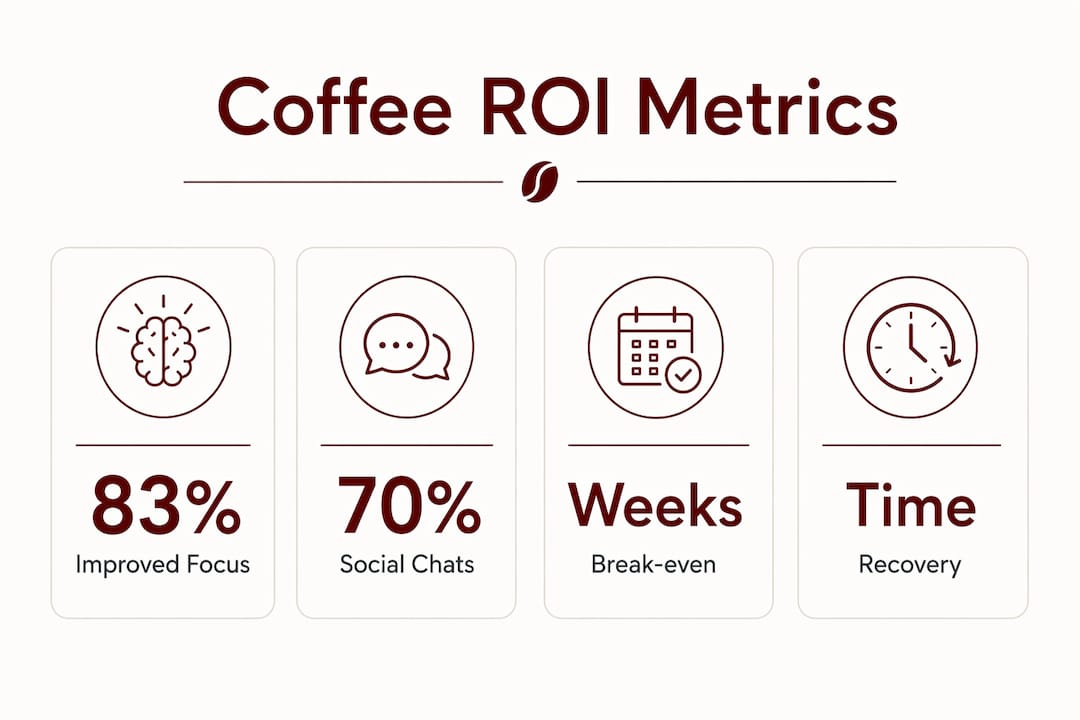
The numbers here are hard to dismiss. Eighty-three percent of employees say quality coffee improves their focus, while eighty-six percent say it makes them feel cared for by their employer. Seventy percent identify coffee-machine chats as the most social part of their workday. That last figure is the one most decision-makers overlook. The machine is not just a caffeine dispenser. It is the informal meeting room.
Beyond the social dimension, high-quality coffee delivers antioxidants and compounds linked to improved alertness and long-term brain health. The energy it provides tends to be cleaner and more stable than what commodity blends produce, which means fewer mid-afternoon crashes and more sustained focus through the afternoon.
The retention math is where the investment case gets concrete. Replacing a single employee can be costly, often amounting to a substantial fraction of their annual salary. A coffee program that meaningfully improves how valued people feel is cheap by comparison. Add the time-recovery angle: off-site coffee runs can consume a substantial amount of time per trip, and quality on-site coffee can reclaim meaningful weekly time per employee. For a team of 20, that is 20 recovered hours weekly.
Key benefits at a glance:
- Improved focus and alertness from cleaner caffeine and antioxidants
- Stronger team cohesion through daily informal interaction
- Reduced off-site time and recovered productive hours
- Higher perceived employer care, which correlates with retention
- A low-cost, high-visibility signal of workplace investment in people
What does “premium coffee” actually mean at work?
Marketing uses the word loosely. In a workplace context, premium has a practical definition: traceable bean origin, a visible roast date, extraction quality matched to the format, and a system treated as an integrated ecosystem rather than a standalone appliance.
A premium machine serving stale, mass-market beans signals superficial quality and fails to deliver value. The machine and the beans are one system — both matter equally.
Format comparison for workplace use:
| Format | Best for | Taste ceiling | Maintenance | Cost per cup |
|---|---|---|---|---|
| Whole-bean grinder machine | 15+ person offices | Highest | High | Low |
| Pod system | Small to mid-size teams | High | Low | Medium |
| High-quality instant | Remote workers, overflow | Good | None | Lowest |
| Functional instant blends | Wellbeing-focused teams | Good | None | Low |
Sustainability signals matter to employees too. Look for fair-price sourcing transparency, compostable packaging, and regenerative farming practices. These are not just ethical choices; they show up in how employees talk about their employer. For a deeper look at roast profiles and artisan formats, the details behind origin and processing are what separate a genuinely premium cup from a premium-labeled one.
Ethical sourcing also means understanding how coffee is grown — altitude, processing method, and farm-level traceability. Employees who care about mindful living notice when a brand can answer those questions.
How to introduce premium coffee at work, step by step
The four-phase rollout:
- Assess. Survey employees on format preference, daily volume, and any dietary restrictions (decaf, dairy-free, caffeine sensitivity). Count headcount and check space, electrical, and plumbing constraints.
- Decide. Match format to reality: pods for low-maintenance simplicity, whole-bean for taste-first offices, high-quality instant for distributed or hybrid teams. Choose between a managed service (automated restock, scheduled cleaning, technical support) and a self-run setup.
- Pilot. Run four to eight weeks. Install equipment, brief staff, offer a sample menu with at least one decaf and one alternative-milk option, and send a short survey at week two and week four.
- Review. Collect survey data, calculate time recovered, and compare satisfaction scores before and after. Use results to finalize the program or adjust format.
Budget brackets (US market estimates):
Small systems can break even within weeks when the format is matched to team size and usage patterns. Turnkey managed services reduce hidden admin costs further by bundling restocking and servicing into one monthly fee.
Pro Tip: Design a dedicated coffee corner rather than tucking the machine in a corner. A purposeful setup increases usage, encourages informal interaction, and signals intentionality. See what a designated coffee corner actually accomplishes for team culture.

How do you measure the ROI of a workplace coffee program?
The most useful metrics are not about coffee at all. They are about time, satisfaction, and retention.
Sample KPI framework:
| Metric | How to measure | Baseline source |
|---|---|---|
| On-site coffee uptake | Weekly cups consumed | Week-one count |
| Time recovered | Minutes saved vs. off-site runs | Pre-pilot employee survey |
| Employee satisfaction score | biweekly survey | Pre-pilot survey |
| NPS-style question | “Would you recommend this office to a friend?” | Onboarding and quarterly |
| Retention indicators | turnover rate | HR records |
For the time-recovery math: if a group of employees each save time daily by skipping an off-site run, that can add up to several hours of recovered productivity per day, translating to significant monthly value depending on hourly rates. Pair that with even a modest improvement in retention and the ROI calculation becomes straightforward to present to leadership.
Run a focus-tracking check-in alongside your satisfaction survey to capture cognitive benefit data. Two questions at week two and week four is enough.
Common objections and how to handle them
Cost concerns. Reframe the expense: the question is not “what does coffee cost?” but “what does turnover cost?” High-quality instant and pod formats keep per-cup costs low while still delivering a premium experience. For celebratory office events, pairing a coffee program with broader catering makes the investment feel even more deliberate.
Health, allergies, and dietary restrictions:
- Always stock at least one decaf option
- Label all products clearly, including any nut-based or oat-based milk alternatives
- Store alternative milks separately and clearly marked
- Offer a functional blend (such as mushroom coffee) for employees who want lower caffeine with added cognitive support
Sustainability worries. Choose beans with traceable sourcing, compostable pod formats, and responsible packaging. These details are increasingly visible to employees and matter in employer-brand conversations.
Operational friction. A managed service model that includes automated restocking, scheduled cleaning, and technical support delivers a near-zero-intervention experience. The admin burden disappears.
Pro Tip: For corporate events or pilot launch days, customized catering integration can turn a coffee rollout into a genuine team moment rather than a quiet equipment swap.
Key Takeaways
Premium coffee is a measurable workplace investment: it recovers productive time, signals employer care, and reduces turnover costs that dwarf the price of a quality program.
| Point | Details |
|---|---|
| Culture and social ROI | Seventy percent of employees report that coffee-machine chats are the most social part of their workday. |
| Cognitive and wellbeing gains | Quality coffee delivers cleaner energy and antioxidants linked to improved alertness and focus. |
| Time recovery math | Off-site runs cost 20–40 minutes each; quality on-site coffee can reclaim up to one hour per week per employee. |
| Retention leverage | Replacing one employee costs 50%–200% of annual salary — a coffee program is cheap by comparison. |
| Espritkaffe pilot option | Light Roasts, Mexico Coffee Pods, Instant Coffee, and Instant Coffee with Mushroom cover every workplace format and preference. |
The ritual is the point
Most workplace coffee conversations get stuck on price per cup. That is the wrong frame. What you are actually deciding is whether the daily ritual in your office signals care or indifference. Those two signals accumulate quietly, and employees feel them long before they can articulate them.
The strongest argument for premium coffee at work is not the antioxidants or the focus data, though both are real. It is that a quality cup, served well, is one of the few daily moments that requires nothing from an employee except presence. That is rare in a workday. Protecting it matters.
The brands and programs that treat coffee as infrastructure, not a perk, tend to build offices people actually want to return to. The ones that default to a stale pod machine and powdered creamer are making a statement too, just not the one they intend.
Espritkaffe’s workplace pilot options
Espritkaffe is built for exactly the kind of intentional coffee program this article describes: clarity-focused roasts, traceable sourcing, and formats that fit real workplace constraints without requiring a barista on staff.
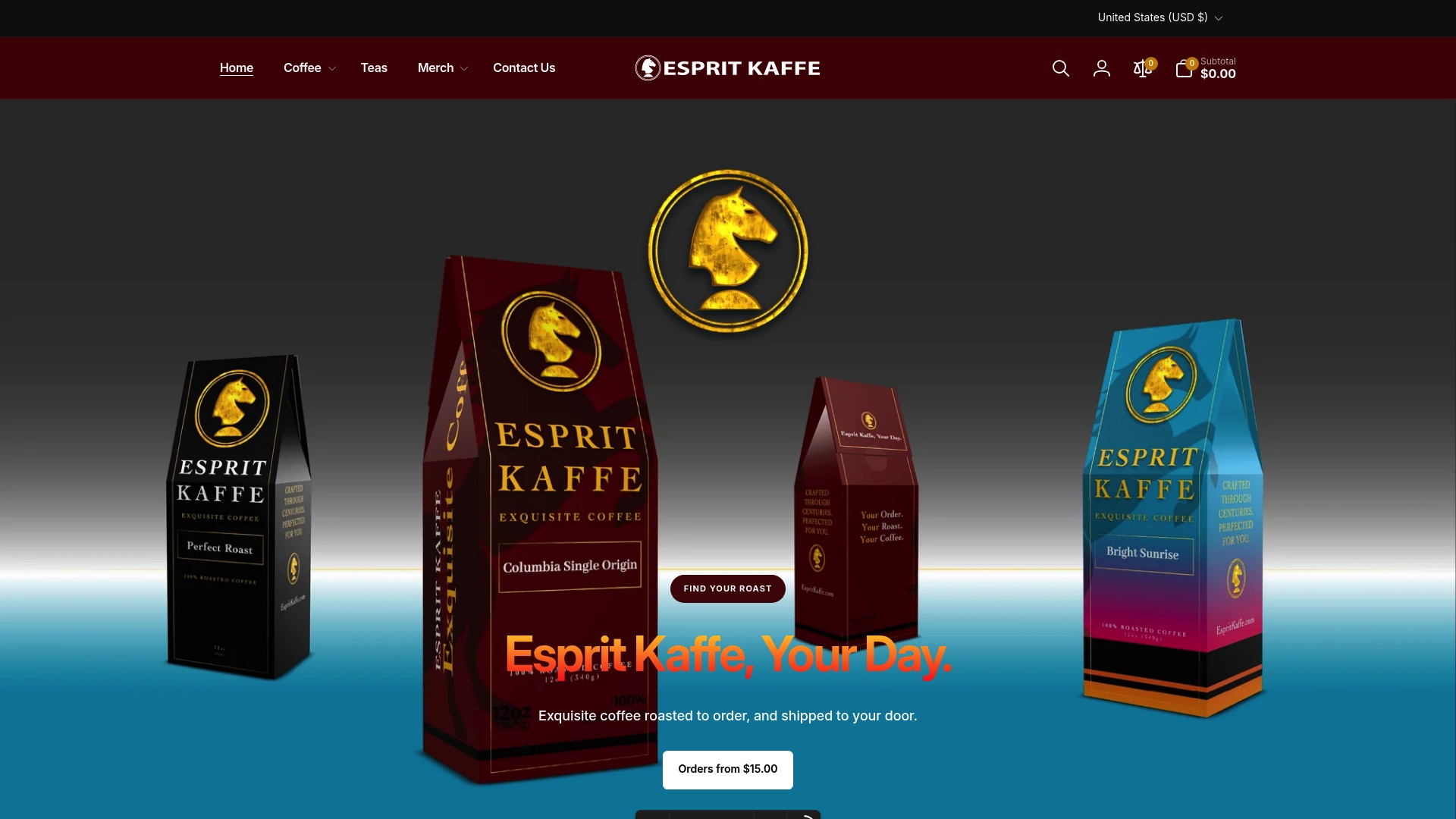
For a four-week pilot, four formats cover the full range of team needs. The Mexico Coffee Pods are the easiest starting point: low-maintenance, consistent, and suited to teams that want quality without equipment complexity. Light Roasts work for offices that prioritize flavor clarity and a smoother energy curve. The Instant Coffee line handles remote workers, overflow demand, and anyone who needs speed above all else. And the Instant Coffee with Mushroom gives wellbeing-minded employees a lower-caffeine functional option with genuine cognitive support credentials.
Request a sample pilot pack at espritkaffe.com and have your first four-week program running before the end of the month.
Useful sources
“The most successful workplace programs treat coffee as a ‘perk with purpose’ and integrate machine, beans, maintenance, and a managed service model into one coherent system.” — Coffee On Cue
- 83% focus, 86% feel cared for: workplace coffee data
- Health benefits of high-quality coffee
- Why smart companies treat coffee as a strategic tool
- ROI from business coffee machines
- 9 ways better office coffee boosts morale and productivity
- Office coffee machine investment: the business case
- Espritkaffe: coffee and focus guide
- Espritkaffe: product pages and roast profiles