

Italian black coffee is defined as a single concentrated espresso shot, consumed quickly while standing at the bar counter, and recognized as the cornerstone of Italian daily life. The standard term is espresso, though the phrase “italian black coffee” captures exactly what coffee enthusiasts and Italian cuisine lovers search for when they want the real thing. This is not a leisurely drink. It is a ritual, a social institution, and a precise preparation with centuries of cultural weight behind it. Understanding it means understanding Italy itself.
What is authentic Italian black coffee?
Italian black coffee is a single espresso shot, roughly 1 ounce, extracted under high pressure in 25–30 seconds. It is served in a small ceramic cup, often pre-warmed, and consumed within minutes. No milk. No foam. No size options. Just concentrated, dark, and direct.
Espresso has several close relatives that coffee enthusiasts should know. A ristretto is a shorter, more concentrated pull using less water, producing an even bolder flavor. A lungo uses more water and extracts longer, creating a slightly milder but still strong cup. A caffè americano is espresso diluted with hot water, producing something closer to American drip coffee in volume but not in character.
| Espresso variant | Water volume | Flavor profile | Typical use |
|---|---|---|---|
| Ristretto | ~0.75 oz | Intense, syrupy, low bitterness | Purists and afternoon drinkers |
| Standard espresso | ~1 oz | Balanced, bold, slightly bitter | Default Italian black coffee |
| Lungo | ~2 oz | Milder, slightly more bitter | Those wanting more volume |
| Caffè americano | ~4–6 oz | Diluted, lighter body | Tourists and international visitors |
The caffè americano deserves a specific note. Italians do not drink it as a default. It exists as a concession to visitors who want a larger cup. Ordering one marks you as someone unfamiliar with Italian coffee norms, which is fine, but worth knowing before you walk up to the bar.
How does Italian coffee culture shape daily rituals?
The Italian coffee bar is a democratic social institution where everyone meets as equals, regardless of profession or income. A construction worker and a lawyer stand at the same counter, drink the same espresso, and pay the same price. That equality is not accidental. It is built into the structure of the bar itself.
Italian bars operate on a two-tier pricing system. Coffee consumed standing at the counter, called al banco, costs significantly less than the same espresso served at a table, called al tavolo. Table service can cost double the counter price for an identical drink. This pricing reflects a social custom, not just a commercial decision. Standing at the bar is the norm. Sitting is a choice that carries a premium.
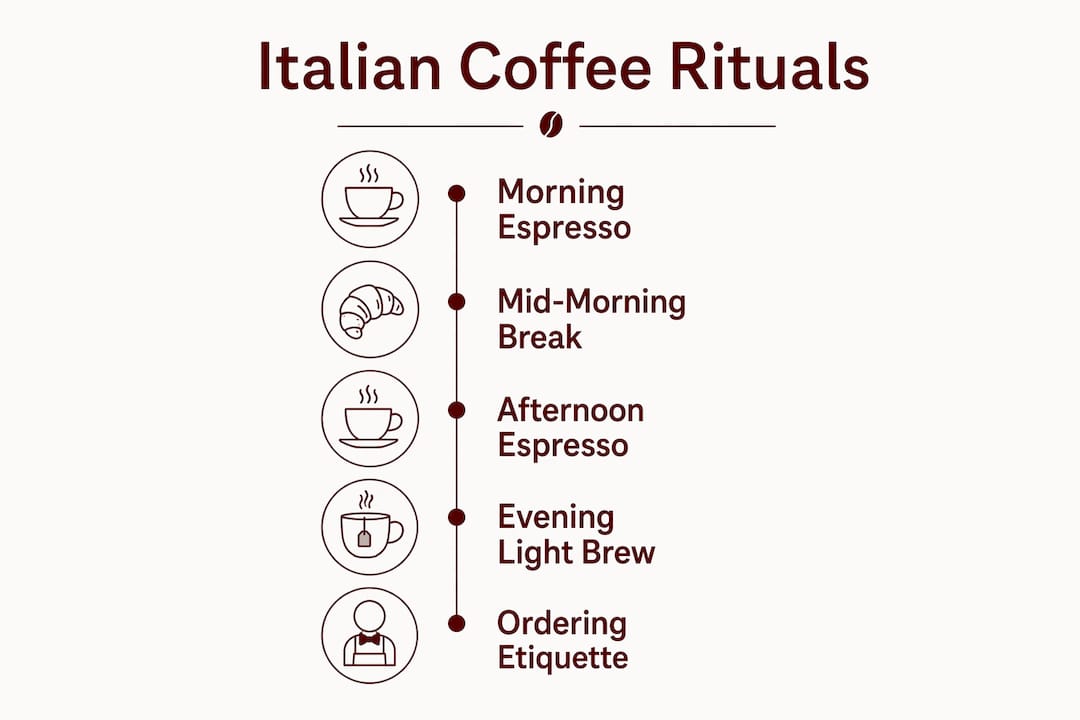
Coffee appears 2–3 times daily in the average Italian’s routine, structured around specific moments: morning, mid-morning break, and after lunch. Each visit lasts only a few minutes. The drink is consumed quickly, the cup is set down, and the day continues.
Regional differences add texture to this picture. Neapolitan espresso uses a darker roast with more Robusta beans, producing a bold, slightly bitter cup often served with sugar or a lemon twist on the rim. Milan and northern cities favor lighter roasts with brighter, more acidic profiles. In Trieste, near the Slovenian border, consumption reaches 1,500 cups per person annually, roughly double the Italian national average, reflecting the city’s unique Central European coffee heritage.
Pro Tip: Order your espresso at the counter, not a table, to pay the local price and experience the bar the way Italians actually use it.
What are the traditional Italian brewing methods?
Two methods define Italian black coffee preparation: the espresso machine in commercial bars and the Moka pot at home.
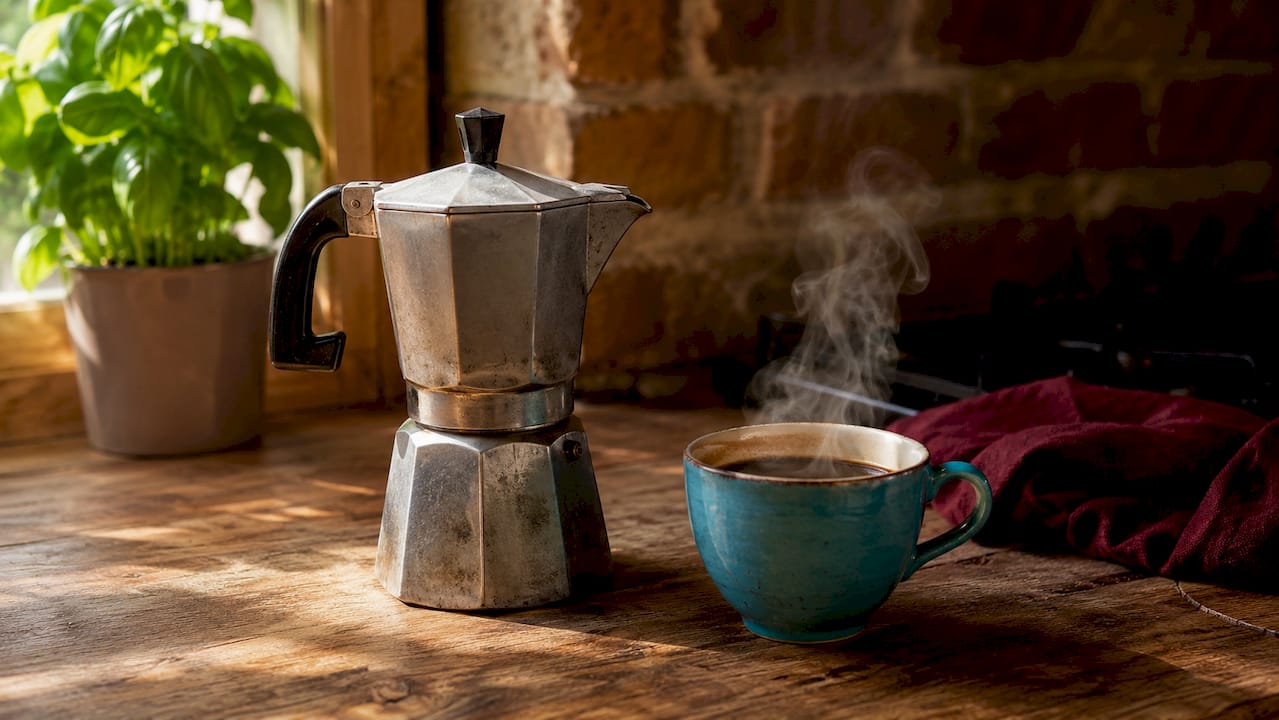
The Moka pot was invented in 1933 by Alfonso Bialetti and remains the go-to home brewing method across Italy. It works by forcing boiling water upward through finely ground coffee using steam pressure. The result is a strong, concentrated brew that closely mimics stovetop espresso in body and intensity. It is not technically espresso, because it does not reach the 9 bars of pressure a commercial machine produces, but the flavor profile is close enough that most Italian households consider it the home equivalent.
| Brewing method | Equipment | Pressure | Flavor profile | Typical setting |
|---|---|---|---|---|
| Commercial espresso machine | Professional bar machine | ~9 bars | Rich crema, intense, complex | Italian bars and cafes |
| Moka pot | Stovetop aluminum pot | ~1–2 bars | Strong, bold, no crema | Italian homes |
| Drip or filter coffee | Drip machine | None | Mild, thin body | Common outside Italy |
The espresso machine in a professional Italian bar is a precision instrument operated by a trained barista. Speed and consistency are the goals. Attempting to frame the barista as an artisan misunderstands the Italian model entirely. The Italian barista is a skilled technician whose value lies in delivering the same perfect shot, hundreds of times a day, without variation. Craft coffee culture celebrates individuality and experimentation. Italian bar culture celebrates reliability and speed.
The Moka pot produces a stronger brew than drip or filter methods, making it the enduring Italian home staple rather than the pour-over or French press methods popular elsewhere. For coffee enthusiasts who want to replicate Italian black coffee at home, the Moka pot is the most authentic starting point. Pair it with a medium-dark to dark roast blend using Arabica and Robusta beans for the closest result.
Pro Tip: Never boil the water inside the Moka pot. Fill the bottom chamber with hot water just below the safety valve, then place it on medium heat. This prevents over-extraction and a burnt, metallic taste.
How do you order Italian black coffee correctly?
Ordering correctly in an Italian bar takes about ten seconds once you know the system. Walk in, go to the register first, pay for your coffee, take the receipt to the barista, and say “un caffè”. That phrase delivers a standard espresso. Nothing more needs to be said.
If you want no sugar added, say “senza zucchero”. Many bars in southern Italy, especially Naples, add sugar during extraction as a default. Specifying upfront avoids a sweet surprise.
A few ordering rules that matter:
- Pay at the register before approaching the bar. This is standard practice in most Italian bars, not optional.
- Say “un caffè” for a standard espresso. Do not say “espresso” to the barista. Italians simply say caffè.
- Say “caffè americano” if you want a longer, diluted version. Expect a slightly puzzled look in smaller towns.
- Say “caffè lungo” if you want a longer extraction without added water.
- Stand at the counter. Sitting down signals you want table service and a higher price.
- Drink quickly. Baristas aim to serve and see customers finish within 2–4 minutes at the counter. Lingering without ordering again is considered poor etiquette.
- Never order a cappuccino after 11 a.m. Milk-heavy drinks are strictly morning beverages in Italian custom. Ordering one in the afternoon identifies you as a tourist immediately.
The speed of the whole transaction surprises most first-time visitors. You walk in, pay, drink, and leave in under five minutes. That pace is the point. The Italian coffee bar is not a place to work on a laptop or hold a meeting. It is a pause, not a destination.
How does Italian black coffee differ from American black coffee?
The difference between Italian and American black coffee is not just size. It is a fundamentally different approach to extraction, concentration, and purpose.
Italian black coffee, meaning espresso, uses 7–9 grams of finely ground coffee extracted under 9 bars of pressure in under 30 seconds. The result is roughly 1 ounce of liquid with a layer of crema on top. American black coffee, typically brewed by drip or filter methods, uses coarser grounds, no pressure, and produces 8–12 ounces of a much lighter-bodied drink.
Key differences at a glance:
- Concentration: Espresso contains more dissolved solids per ounce than any other brewing method. A single shot delivers more caffeine per ounce than drip coffee, though the total caffeine per serving is often lower due to volume.
- Bean blend: Italian espresso blends typically combine Arabica for sweetness and complexity with Robusta for body, crema, and a caffeine boost. American specialty coffee often uses single-origin Arabica with no Robusta.
- Roast profile: Italian espresso traditionally uses a dark roast, which reduces acidity and produces the characteristic bittersweet flavor. American drip coffee spans a wide range from light to dark roast.
- Serving temperature: Espresso is served hot and consumed immediately. American drip coffee is often consumed over 20–30 minutes, sometimes with ice.
- Cultural role: Italian espresso is a quick social ritual. American coffee is often a sustained activity, consumed during commutes, meetings, or extended work sessions.
The caffè americano exists precisely because of this gap. When American soldiers in Italy during World War II found espresso too strong and too small, Italian baristas began diluting shots with hot water to approximate the volume they were used to. The name stuck. The drink remains Italy’s answer to American drip coffee, though Italians themselves rarely order it.
Key takeaways
Authentic Italian black coffee is a single espresso shot consumed standing at the bar, shaped by strict cultural rituals, regional variation, and a two-tier pricing system that rewards locals who drink fast.
| Point | Details |
|---|---|
| Italian black coffee means espresso | Order “un caffè” at any Italian bar to receive a standard single espresso shot. |
| Counter pricing saves money | Standing at the bar costs significantly less than sitting at a table for the same drink. |
| Moka pot is the home standard | Invented in 1933, the Moka pot remains Italy’s primary home brewing method for strong black coffee. |
| Regional roasts vary widely | Naples favors dark, bold Robusta blends; Milan and the north prefer lighter, more acidic profiles. |
| Milk drinks end at 11 a.m. | Ordering a cappuccino after mid-morning is a reliable way to identify yourself as a tourist in Italy. |
Why the ritual matters more than the recipe
I have spent time in Italian bars from Rome to Trieste, and the thing that consistently surprises people is how little the coffee itself is the point. The drink takes 90 seconds to make and 90 seconds to drink. What surrounds it is the whole story.
The bar counter functions as a kind of daily reset. You walk in, you nod at the barista, you drink your espresso, and you leave. No decision fatigue, no customization menu, no waiting in a line that takes longer than the drink itself. The ritual is stripped down to its minimum, and that minimalism is what makes it powerful.
What I find most worth adopting at home is not the equipment or even the roast. It is the intentionality. Italians do not drink coffee while doing something else. They stop, they drink, and then they continue. That pause, even if it lasts only three minutes, resets attention in a way that a 20-ounce travel mug consumed during a commute simply cannot replicate.
For coffee enthusiasts who want to bring this home, start with a Moka pot and a dark roast Italian-style espresso blend. Use it as a signal to stop, not a fuel to keep going. The coffee will taste better, and so will the rest of your morning.
— Jett
Espritkaffe and the Italian coffee tradition

Espritkaffe builds coffee for people who treat their first cup as a deliberate act, not a reflex. The Espritkaffe Italian Roast is roasted specifically to deliver the bold, bittersweet character of a traditional dark espresso, whether you pull it through a machine or brew it in a Moka pot at home. For those who want the ritual without the setup, Espritkaffe’s instant coffee delivers a strong, clean cup in under a minute. Every product is roasted to order, because the Italian approach to coffee and the Espritkaffe approach share the same core belief: the right cup, prepared correctly, changes the tone of the entire day.
FAQ
What does “un caffè” mean in Italy?
Ordering “un caffè” in Italy delivers a standard single espresso shot. It is the default phrase for black coffee at any Italian bar.
Why is Italian espresso served in such a small cup?
Espresso is a concentrated extraction designed to be consumed in one or two sips. The small cup preserves heat and crema, both of which degrade quickly after extraction.
Is a Moka pot the same as an espresso machine?
A Moka pot produces a strong, concentrated brew similar to espresso but operates at lower pressure, around 1–2 bars versus the 9 bars of a commercial machine. The result lacks crema but delivers comparable intensity.
Why do Italians not drink cappuccino in the afternoon?
Milk-heavy drinks are considered morning beverages in Italian coffee culture. Drinking a cappuccino after 11 a.m. is widely seen as a tourist habit and is generally avoided by locals.
What is the difference between a ristretto and a lungo?
A ristretto uses less water than a standard espresso, producing a shorter, more concentrated shot. A lungo uses more water and extracts longer, creating a milder but still strong cup with slightly more volume.