

Coffee-based sensory grounding is the practice of using your cup’s aroma, warmth, taste, and texture as deliberate anchors to pull your attention into the present moment. It takes 30–90 seconds at minimum, and you can start right now:
- Smell: Hold your cup two inches from your nose. Breathe in slowly for four counts. Notice one specific scent — roasted, nutty, floral, whatever’s there.
- Feel: Wrap both hands around the cup. Register the warmth spreading into your palms. Let your shoulders drop.
- Sip: Take one slow sip. Hold it for two seconds before swallowing. Notice the weight and temperature on your tongue.
That’s it. Three steps, under 90 seconds, and your nervous system has a concrete sensory anchor to return to all morning.
Key Takeaways
Coffee-based sensory grounding works because deliberate attention to aroma, warmth, and taste anchors your brain in the present before caffeine or cognitive effort begins.
| Point | Details |
|---|---|
| Start with three senses | Smell, feel, and sip in sequence — 30–90 seconds is enough to anchor attention. |
| Roast drives emotion | Roasted, bitter, full-bodied notes correlate with alert, positive emotions; sour or fruity notes tend to reduce that effect. |
| Cup and lid matter | Open ceramic or glass cups release more aroma; lids measurably reduce enjoyment and grounding effect. |
| Consistency beats duration | A 60–90 second micro ritual practiced daily outperforms an occasional 10-minute session. |
| Espritkaffe for the ritual | Fresh-roasted beans with clean flavor profiles support the aroma intensity the ritual depends on. |
Table of Contents
- Why your senses use coffee to sharpen your focus
- How to practice a 2–5 minute sensory grounding ritual each morning
- What actually makes the ritual stronger: roast, cup, sound, and temperature
- How to adapt the ritual for your schedule and caffeine sensitivity
- Your printable morning ritual checklist
- Why I build my morning around a sensory cup
- Espritkaffe beans built for a sensory grounding ritual
- Sources
Why your senses use coffee to sharpen your focus
Sensory input from your cup doesn’t just taste good. It redirects your brain’s attention circuits, lowers decision friction, and shifts your emotional state before caffeine even kicks in.
Each sense contributes something distinct:
- Smell: Olfactory signals travel directly to the limbic system, the brain’s emotion and memory hub. A familiar roasted aroma triggers positive emotional associations almost instantly.
- Touch: Holding a warm cup activates parasympathetic cues. The tactile warmth signals safety and slows the stress response.
- Taste: Flavor complexity keeps attention engaged in the present rather than drifting to a task list.
- Sight: Watching a pour, a bloom, or steam rising gives your visual cortex a low-demand focal point that restores directed attention.
- Sound: Grinding, water hitting grounds, a kettle’s hiss — these preparation sounds set expectation and prime your brain for the sensory experience ahead.
Research backs the emotional side of this. A consumer and descriptive panel study found that roasted, bitter, and full-bodied attributes drove positive high-energy emotions — active, alert, awake, energized — while sour, fruity, or woody notes tended to reduce positive affect.
A separate multisensory review confirmed that ambient sound and preparation noises alter perceived taste and emotional response — a phenomenon researchers call sonic seasoning. The sounds you brew with are part of the ritual, not background noise.
Researchers also developed a 44-term emotion lexicon specific to coffee drinking, showing a strong correlation between sensory acceptability and distinct emotional responses. Naming what you feel during the ritual — “alert,” “calm,” “satisfied” — reinforces the grounding effect.
How to practice a 2–5 minute sensory grounding ritual each morning
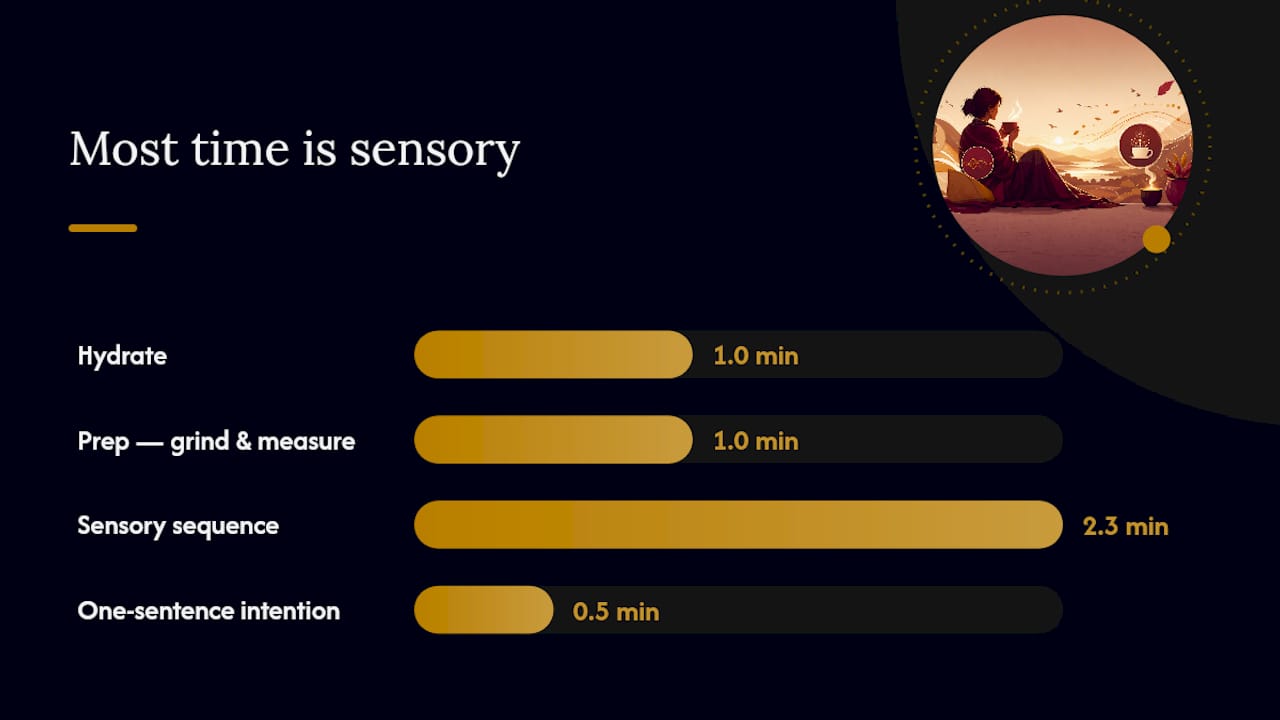
Two to five minutes is enough to feel present and focused before the day takes over. Here’s a timed sequence you can follow:
- Hydrate first (1 min): Drink a glass of water before brewing. Your body is mildly dehydrated after sleep, and hydration sharpens the sensory experience that follows.
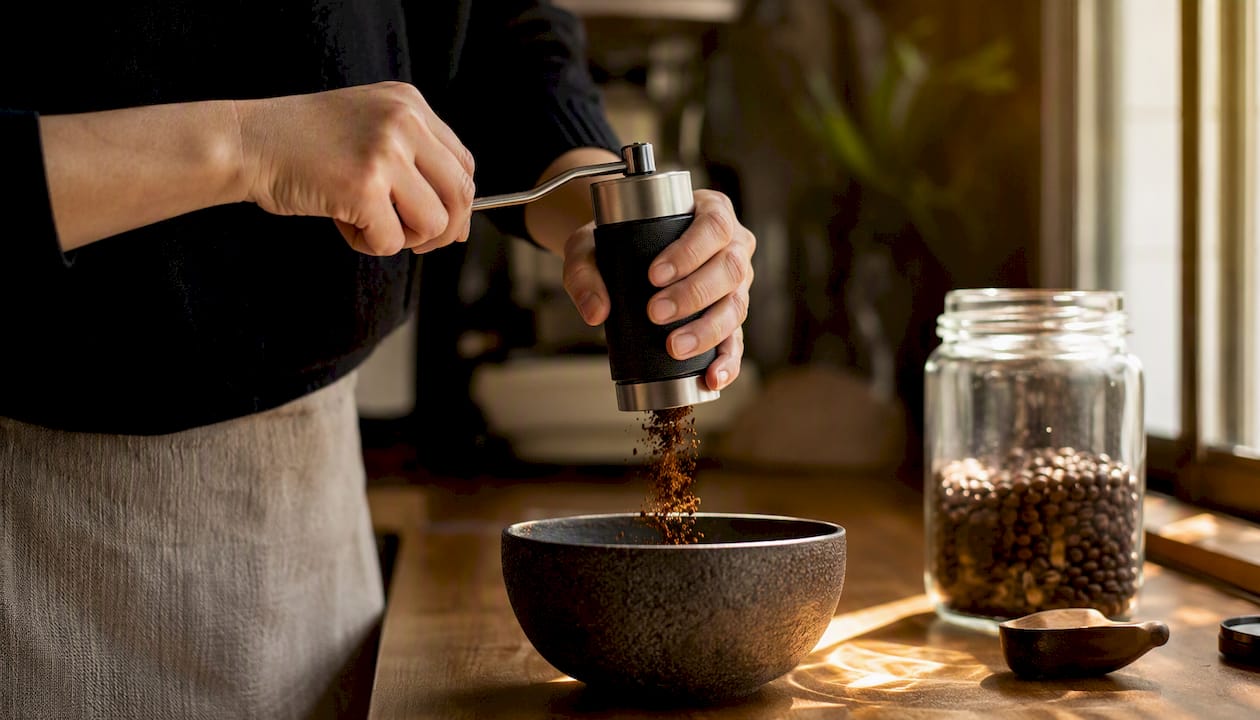
- Prep with intention (1 min): Measure your beans, grind them fresh, and listen. The grinder’s sound and the bloom of fresh grounds are sensory cues in themselves. Manual steps like weighing and watching the bloom provide what researchers call “soft fascination,” which helps restore directed attention according to morning ritual guidance.
- The aroma pause (30 sec): Before your first sip, hold the cup close and breathe in twice. This is the highest-intensity olfactory moment of the ritual.
- The tactile hold (20 sec): Both hands on the cup. Feel the heat. Take one slow breath.
- The focused sip (1–2 min): Drink the first third of your cup without your phone. Notice flavor, temperature, and texture on each sip.
- One-sentence intention (30 sec): State or write one thing you want to feel or accomplish today. This closes the cue–routine–reward loop.
Micro and short versions:
- Micro (60–90 sec): Smell pause + tactile hold + one sip. No brewing ritual needed — works with any cup.
- Short (3 min): Steps 3–6 only, using a pre-made cup.
- Full (5 min): All six steps with a manual brew method.
Mindful coffee ritual guidance argues that even the compressed 60–90 second version structures attention and reduces decision friction when practiced consistently.
Pro Tip: Set your cup, not your phone, as the first object you touch in the morning. That single habit change anchors the ritual before you’ve made any conscious decision.
The habit loop here is simple: the grinder sound is the cue, the sensory sequence is the routine, and the feeling of presence is the reward. Keep the cue consistent and the ritual survives even rushed mornings.
What actually makes the ritual stronger: roast, cup, sound, and temperature
Small adjustments to your setup produce noticeably stronger sensory cues.
- Roast level: Medium to dark roasts carry the roasted, bitter, full-bodied notes that research links to alerting, positive emotions. Light roasts with bright citrus or fruity notes can be pleasant but tend to produce less of the energizing emotional response for most drinkers.
- Grind fresh: Pre-ground coffee loses volatile aromatics within 15–30 minutes. A burr grinder preserves the aroma intensity that makes the smell pause worthwhile.
- Cup material: Open ceramic or glass cups outperform paper or plastic for aroma release and perceived enjoyment. Multi-country consumer data found that lids measurably reduce enjoyment, with the effect strongest in cooler conditions. Drink without a lid whenever you can.
- Serving temperature: 140–160°F is the sweet spot for aroma volatility and comfortable sipping. Too hot and you can’t smell clearly; too cool and the aromatics flatten.
- Ambient sound: Low-tempo instrumental music or natural sounds can amplify the ritual’s calming effect. Loud, lyric-heavy music competes with sensory focus. The same sonic seasoning review notes that preparation sounds themselves — grinding, pouring, the kettle — prime taste expectation.
Pro Tip: Warm your ceramic cup with hot water for 30 seconds before brewing. The tactile warmth lasts longer and the aroma release from a pre-warmed cup is noticeably stronger.
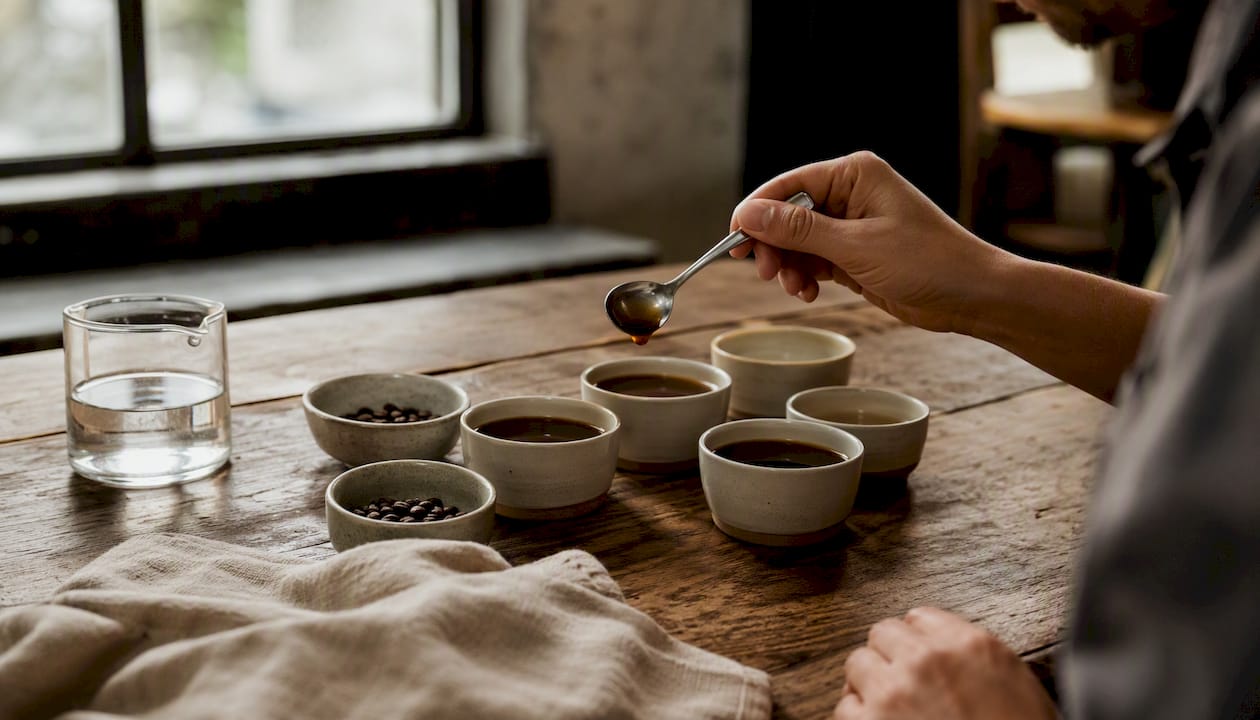
For deeper sensory training, the Espritkaffe guide on coffee taste testing walks through flavor mapping you can layer onto this ritual once the basics feel automatic.
How to adapt the ritual for your schedule and caffeine sensitivity
Yes, you should personalize this. A ritual that doesn’t fit your life won’t survive the week.
Timing:
- Delaying your first cup roughly 90 minutes after waking aligns with natural cortisol rhythms and tends to produce steadier caffeine effects, according to anchor habit guidance. You don’t have to be rigid about it, but waiting until you’ve moved, hydrated, and had some light exposure makes the ritual feel more intentional.
- Morning is the highest-enjoyment window. The same multi-country contextual study found a consistent morning advantage for coffee enjoyment and alert feelings.
Caffeine sensitivity adaptations:
- Use a half-caf blend or quality decaf for the afternoon version. The sensory ritual works independently of caffeine dose.
- Limit full-caffeine ritual cups to before 2 PM to protect sleep quality.
Common mistakes:
- Multitasking during the ritual. Scrolling or answering messages while sipping eliminates the attentional benefit entirely.
- Using a travel mug with a lid. Aroma is the strongest sensory lever; blocking it undercuts the whole practice.
- Making the ritual too long to sustain. If five minutes feels like a burden, drop to the micro version. Consistency beats duration.
Pro Tip: For commute mornings, pre-brew into a wide-mouth thermos and do the smell pause and tactile hold at your desk before the first sip. The ritual travels.
Remote workers can pair the ritual with their first work block using the remote work coffee timing guide for scheduling ideas.
Your printable morning ritual checklist
One-line reminder: Smell it. Feel it. Sip it. Be here.
Full version (5 min):
- Drink a glass of water
- Measure and grind beans fresh
- Brew with a manual method (pour-over, French press, AeroPress)
- Hold the cup, breathe in twice, name one scent
- Both hands on the cup — feel the warmth for 20 seconds
- First sip: no phone, notice flavor and temperature
- Write or say one intention for the day
Short version (3 min):
- Skip brewing steps; use a pre-made cup
- Aroma pause, tactile hold, focused sip, one intention
Micro version (60–90 sec):
- Smell pause, both-hands hold, one slow sip
Pro Tip: Print this checklist and tape it inside a cabinet door near your coffee setup. Visual cues lower the activation energy to start the ritual on autopilot.
Why I build my morning around a sensory cup
The argument for a sensory coffee ritual isn’t about slowing down. It’s about the quality of attention you bring to everything that follows.
A cup approached with full sensory presence does something a scrolled-through morning doesn’t: it gives your brain a concrete, repeatable anchor before the noise starts. The research on emotion lexicons and sensory acceptability confirms what most attentive coffee drinkers already sense — that a specific cup, brewed a specific way, reliably produces a specific feeling. That’s not mysticism. That’s conditioning, and it works in your favor when you design it deliberately.
The mistake most people make is treating the ritual as optional. It isn’t. The 90 seconds you spend on the smell pause and tactile hold are the cheapest focus investment of your day. Everything else you do to improve your mornings — journaling, exercise, planning — lands better when attention is already anchored.
Espritkaffe beans built for a sensory grounding ritual
The ritual only works as well as the coffee you put in the cup. Espritkaffe roasts to order, which means the aromatics in your bag are fresh, not sitting in a warehouse.

For the morning grounding ritual, a medium roast with clean, balanced flavor gives you the roasted and full-bodied notes that research links to alerting, positive emotions — without the sharp bitterness that can distract from the sensory experience. The Coffee with Mushrooms Medium Roast adds adaptogen support for readers who want steady energy without caffeine spikes. For a low-friction batch option or an afternoon ritual, Espritkaffe’s Cold Brew delivers clean, concentrated flavor you can prep the night before. Browse the full range at Espritkaffe and choose the roast that fits your ritual.
Sources
The claims in this article draw on peer-reviewed consumer research, multisensory science, and practitioner ritual guidance:
- Sensory drivers of liking, purchase intent and emotions toward brewed black coffee
- The multisensory experience of coffee: atmosphere, sound, and sonic seasoning (Frontiers review)
- Contextual factors and coffee enjoyment across time, cup, and culture (Nature Communications/Sensory Economics study)
- An emotion lexicon for the coffee drinking experience
- Brew Your Best Life: The Mindful Coffee Ritual
For practical brewing depth, the Espritkaffe coffee cupping guide and focus and coffee roundup extend what this article covers into hands-on sensory training.